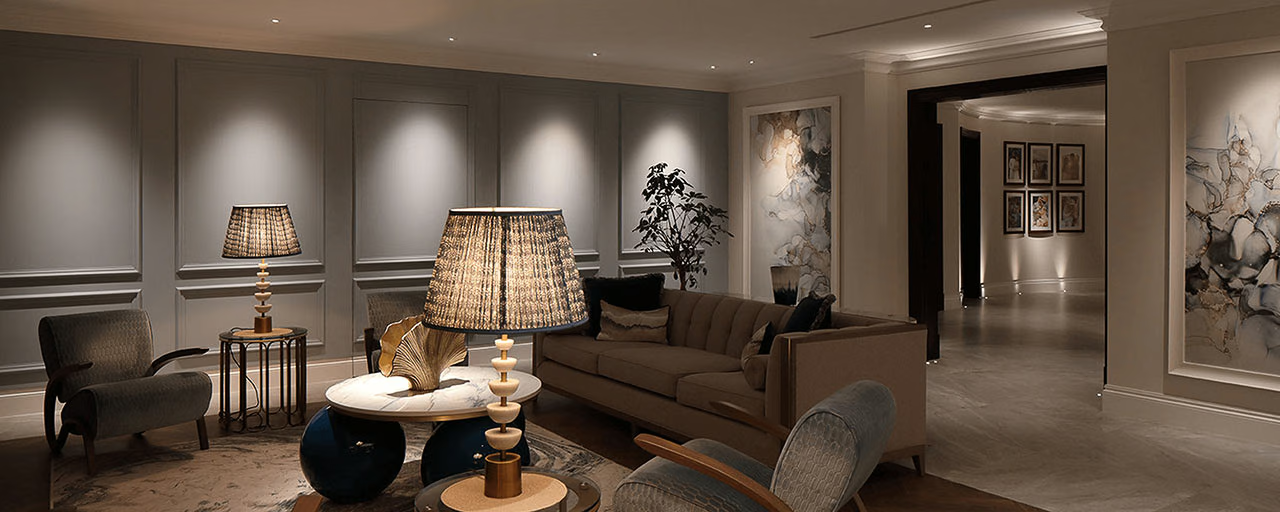
Introduction to smart lighting – why it is a top priority in your home?
Introduction to Smart Lighting – Why It’s a Top Priority in Your Home
Walk into a well-designed home in Fort Lauderdale or Miami Beach at sunset, and the first thing you notice is how the space feels. The materials look richer. The ceilings appear taller. The transition from daylight to evening happens without anyone touching a switch. That feeling – effortless, quiet, almost invisible – is what a professional lighting control system actually delivers.
Lighting is often misunderstood as a convenience feature: an app that turns bulbs on and off from your phone. In a luxury residence, it is something far more deliberate. It is an architectural layer – a system that shapes how every surface, texture, and volume in a home is perceived throughout the day.
What Smart Lighting Really Means in a High-End Home
At its core, a lighting control system gives you centralized, programmable control over every light source in your home. But in practice, the gap between a consumer-grade setup and a professionally integrated system is enormous.
Consumer products like Philips Hue or basic Wi-Fi bulbs offer color changes and app control. They work fine in a studio apartment. In a 5,000-square-foot waterfront residence with 80 to 150 lighting circuits, architectural cove lighting, landscape fixtures, and dedicated art lighting, they fall apart – technically and aesthetically.
A professional system built on platforms like Lutron HomeWorks, Ketra, or Crestron operates differently. Every fixture is calibrated. Dimming curves are smooth and flicker-free. Scenes transition gradually across the entire home. The system integrates with motorized shades, climate control, and security – so when you tap “Good Evening,” the shades lower, the lights warm to 2700K, the HVAC adjusts, and the exterior path lights come on. One gesture. Every system responds.
Centralized, Wireless, and Hybrid Systems
Before choosing fixtures and scenes, the first decision in any lighting project is the system architecture. There are three approaches, and each one suits a different situation.
Centralized (Wired) Lighting
In a centralized system, all lighting loads are routed through dedicated processors – typically installed in a structured wiring closet or equipment rack. This is the gold standard for new construction and major renovations. The wiring is hidden inside walls, every circuit is independently addressable, and the system supports dozens of simultaneous scenes without latency. Centralized systems from Lutron and Crestron also integrate directly with whole-home control platforms, giving you a single interface for lighting, audio, shades, and climate.
The tradeoff is that centralized wiring needs to be planned early – ideally during the design phase, in coordination with the architect and electrical engineer. Retrofitting a finished home with centralized wiring is possible but significantly more involved.
Wireless Lighting
Wireless systems use RF communication between devices, eliminating the need for dedicated control wiring. Lutron’s RadioRA 3 and Crestron’s wireless dimmers are common choices here. They are faster to install, less invasive, and well-suited for completed homes, condominiums, and spaces where opening walls is not practical.
Wireless systems have improved dramatically in reliability over the past several years, but they may require RF repeaters in larger homes, and the range of compatible fixtures and load types can be narrower than a fully wired system.
Hybrid Lighting
Many of the projects we work on across South Florida end up as hybrid installations. The main living areas – kitchen, living room, primary suite, outdoor terrace – run on centralized wiring for maximum flexibility, while secondary spaces use wireless components. This approach balances performance, budget, and construction timeline. If you want to go deeper on how these two approaches compare, our article on low voltage wiring covers a lot of the groundwork worth understanding first.
Circadian Lighting and Tunable White
One of the most meaningful advances in residential lighting over the past decade is tunable white technology – the ability to shift color temperature throughout the day. Morning light at 4000K to 5000K feels crisp and energizing. Evening light at 2200K to 2700K feels warm and restful. This is not just aesthetics; it supports your body’s natural circadian rhythm by reducing blue-light exposure after sunset.
In South Florida, where intense natural sunlight pours through floor-to-ceiling glass for most of the year, circadian tuning becomes especially relevant. A well-designed system coordinates interior lighting with automated shades – adjusting artificial light as natural light changes throughout the day – so the home always feels balanced. Ketra fixtures, for example, deliver continuous-spectrum tuning that renders materials and skin tones with exceptional accuracy. That’s part of why architects and lighting designers are increasingly specifying them in high-end residential work.
For clients interested in how the home environment affects how they feel day to day, lighting works alongside air quality, temperature, and acoustic management as part of a broader wellness-focused design.
Energy Efficiency That Scales
Lighting control is one of the most effective ways to reduce energy consumption in a large residence – not because of the bulbs themselves (though modern LED technology now delivers 100 or more lumens per watt), but because of how the system manages those bulbs.
Occupancy and vacancy sensors ensure lights are only on when spaces are in use. Daylight harvesting adjusts interior brightness based on ambient natural light coming through the windows. Scheduled scenes prevent the common problem of a large home running dozens of fixtures at full intensity all day when no one is in the room. In a typical luxury home in Miami-Dade or Broward County, a properly programmed lighting control system can reduce lighting energy use by 30 to 50 percent compared to conventional switches and dimmers.
This also connects directly into broader energy management – where lighting, HVAC, and shade automation work together to reduce the overall load on the home, particularly during South Florida’s peak cooling months.
Where Lighting Control Makes the Biggest Difference
Every room benefits from intelligent lighting, but some spaces reveal the impact more clearly than others:
- Kitchens – Task lighting over countertops dims to ambient warmth for evening entertaining, while under-cabinet LEDs shift color temperature to match the time of day.
- Primary suites – Wake-up scenes gradually increase brightness over 15 to 30 minutes, replacing the jolt of a switched-on overhead fixture. Evening scenes lower to near-candlelight levels without any manual adjustment.
- Home theaters and media rooms – Lighting integrates with the AV system so pressing “Play” dims the room and activates bias lighting behind the screen. Learn more about how we approach home theater design and installation.
- Outdoor living and landscape – Path lights, pool lighting, and architectural uplighting activate on schedule or by sensor, extending the usable hours of South Florida’s outdoor spaces while adding a layer of security.
- Wine cellars and art collections – Low-UV, high-CRI lighting protects sensitive materials while rendering color with the kind of accuracy that matters to collectors and the designers working with them.
- Yachts – Marine-grade lighting systems face unique challenges: salt corrosion, compact spaces, and the need for everything to work within a vessel’s electrical architecture. We apply the same architectural lighting principles aboard yachts as we do in waterfront residences. See our yacht AV and technology integration services for more on how that translates to a marine environment.
What Architects and Designers Should Know
For architects and interior designers specifying connected homes in South Florida, lighting control is one of the systems that most directly affects how a finished space is perceived. It is also one of the most often added too late in the process.
Lighting control wiring should be coordinated alongside electrical plans – not treated as an add-on after the walls are closed. The earlier an integrator is brought into the conversation, the cleaner the result, both technically and visually.
Fixture compatibility matters more than most people expect. Not every decorative fixture dims well on every platform. The relationship between the control system and the fixture’s driver or transformer determines whether dimming is smooth or full of flicker and buzz. Getting that right starts with the spec, not the punchlist.
Keypads, touchscreens, and control interfaces are also part of the interior design – not just the technology package. Lutron offers keypads in custom finishes that coordinate with hardware selections throughout the home, which matters when you’ve spent months aligning every other material detail. For a deeper look at how scene-based lighting control works in practice, our guide to Lutron lighting control systems in Miami shows what’s possible with Lutron in a South Florida home.
If you’re working on a project that includes lighting control, we’d welcome the conversation early. Visit our design partners page or read our recent article on smart home integration tips for Miami architects and designers.
Ready to Think Through Your Lighting?
Lighting control is the foundation that most other systems in a luxury home build on. It shapes how rooms feel, how materials read, how energy is used, and how well technology disappears into the background of daily life.
If you are building, renovating, or rethinking the lighting in your South Florida home, our professional lighting design and controls team takes over from where the planning leaves off. We can walk you through what a professional system looks like – from initial design and fixture coordination through programming, commissioning, and long-term support.
Give us a call at (954) 251-0600 or visit our contact page to start the conversation.