
Light-bulb Created with Sketch. sqf security-camera

Teaching, Amplified

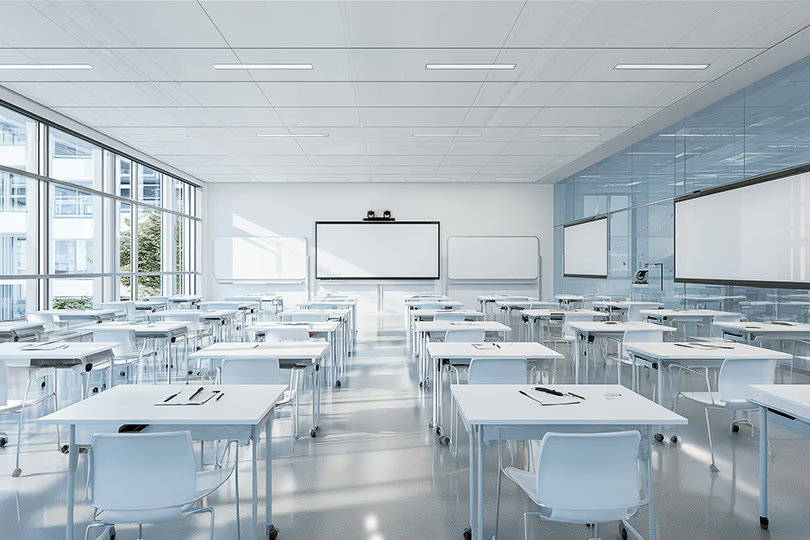
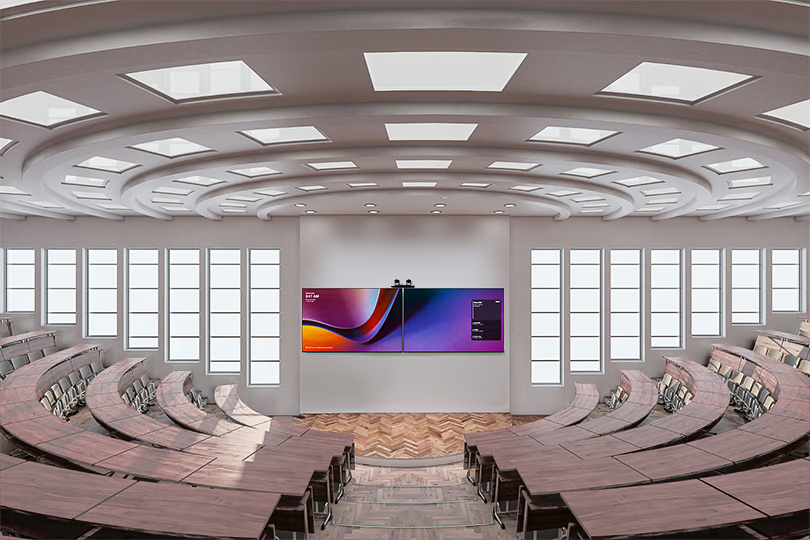
From K-12 classrooms to university lecture halls, technology should extend instruction—not interrupt it. Our work in school AV installation South Florida aligns audiovisual systems, Networks & WiFi, Campus Security, and intelligent classroom automation into campus-wide consistency.

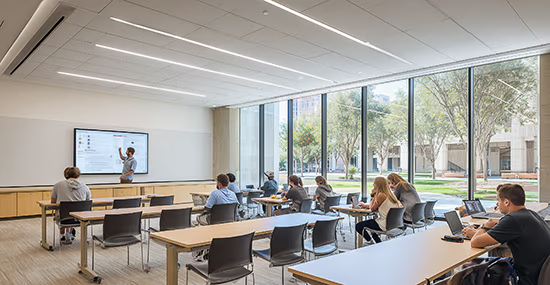
Teacher presenting with automated camera tracking

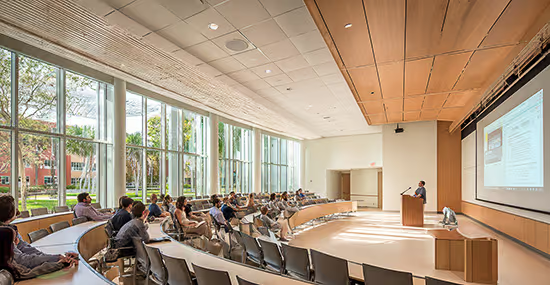
Across Miami-Dade, Broward, and Palm Beach, institutions are rethinking how classrooms support instruction. Modern classroom technology integration now includes intelligent multi-camera automation that frames presenters and follows discussion naturally. Interactive displays, classroom audio amplification, and wireless sharing align with Google Classroom, Canvas, and Microsoft 365 Education. The result is a standardized experience where hybrid participation feels seamless and faculty focus on teaching - not switching inputs. Across Miami-Dade, Broward, and Palm Beach, we support private schools, charter networks, and university campuses with standardized classroom AV, hybrid lecture capture, campus WiFi upgrades, and integrated access control systems.

Frequently asked questions

What does school AV installation South Florida typically include?+

For K-12 and universities, scope usually covers interactive displays, classroom audio amplification, intelligent lecture capture, and larger venue systems such as auditorium sound reinforcement. We also evaluate Networks & WiFi readiness, structured cabling, and security alignment to ensure everything operates cohesively across campus. The priority is reliability, standardization, and ease of use.

How does classroom technology integration differ for K-12 versus universities?+

K-12 environments prioritize simplicity, fast class start times, and repeatable room layouts. Universities often require advanced lecture capture, automated multi-camera tracking, and flexible presentation formats. In both cases, classroom technology integration must feel intuitive to instructors while operating on a stable network foundation that supports hybrid participation without interruption.

How do you standardize technology across charter schools, K-12 campuses, or university buildings?+

Charter schools often grow quickly, adding classrooms or entire campuses over short timelines. We establish repeatable room templates - consistent control flow, display strategy, audio logic, and hybrid capability - that scale predictably. For K-12 networks and universities alike, this reduces retraining, simplifies IT inventory, and keeps support manageable. Standardization ensures that whether a teacher moves across buildings or a charter expands to a new location, the experience remains familiar and reliable.

What role do Networks & WiFi play in K-12 and higher education AV systems?+

AV reliability depends on bandwidth planning, switching architecture, and consistent wireless coverage. Lecture capture, digital signage, wireless presentation, security video, and access control all rely on stable Networks & WiFi. We assess infrastructure readiness early to ensure performance remains steady during testing periods, events, and high-traffic hours.

Can auditorium and gymnasium systems be aligned with classroom AV in K-12 schools?+

Yes. Auditorium sound system school planning and gymnasium audio installation are integrated into the same campus audio visual framework as classrooms. This creates consistent control logic and predictable audio clarity. Assemblies, athletics, and performances operate with the same reliability as daily instruction.

How is campus security and access control integrated in educational environments?+

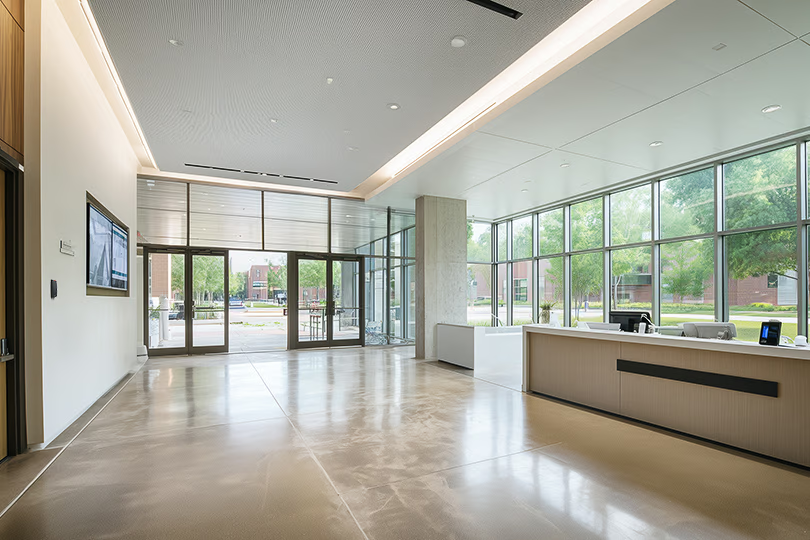
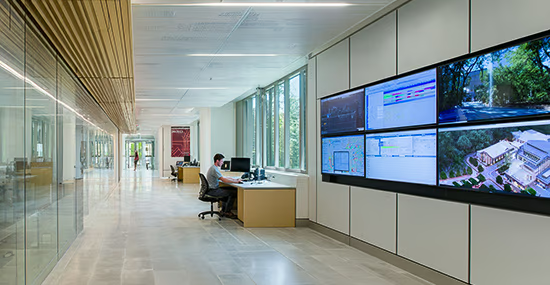
Campus Security and Access Control are planned alongside AV and network infrastructure. Credential-based entry, camera oversight, and centralized visibility operate on the same backbone as instructional systems. This unified approach reduces departmental silos and simplifies management for facilities and IT leaders.

What timeline should K-12 schools or universities expect?+

Most projects are scheduled during summer or academic breaks to avoid classroom disruption. Timeline depends on room count, infrastructure upgrades, and procurement cycles. Larger campuses may phase work by building or zone to maintain operational continuity while modernizing systems.

What support model is available after deployment for K-12 and universities?+

We provide faculty training, room documentation by type, and priority response during school hours. Preventive maintenance during breaks and remote monitoring options reduce downtime. The objective is predictable performance and reduced support tickets across campus.

Do lighting control and motorized shades play a role in K-12 and university classrooms?+

Yes. Lighting and motorized shades significantly affect visibility, camera exposure, and student comfort. In hybrid-enabled classrooms and lecture halls, automated lighting scenes and shade positioning improve screen clarity and lecture capture quality. In K-12 environments, simple preset scenes help teachers transition between instruction modes quickly. These systems are integrated with audiovisual control and network infrastructure to ensure predictable performance across classrooms, auditoriums, and shared learning spaces.

Designed for Instruction

Whether supporting early learners or graduate-level seminars, the goal is the same: clarity, simplicity, and reliability. Our approach to school AV installation South Florida integrates intelligent speaker tracking, hybrid-ready lecture capture, resilient Networks & WiFi, and discreet campus security - so every space supports the way educators actually teach.

What Clients Say

Design the Next Standard for Your Campus

Evaluate classrooms, lecture halls, WiFi infrastructure, security, lighting, and hybrid automation through a unified campus strategy built around your academic calendar and growth plans.
(954) 251-0600