
Chris D.
Homeowner
We live with doors open most of the year. The system never changes how the house feels—just how confident we are leaving it.

Security loses its value the moment it compromises privacy.
Every home has boundaries—between public and personal, shared and private, seen and unseen. Good security respects those lines completely.
Surveillance isn’t about observing life. It’s about protecting it. Coverage is intentional, views are restrained, and every angle is considered with discretion in mind.
Neighbors remain neighbors. Guests remain guests. The home never feels watched—only cared for.
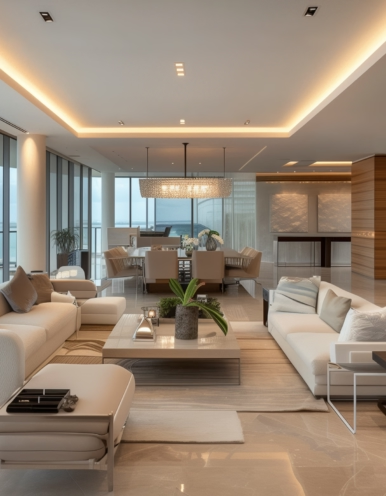
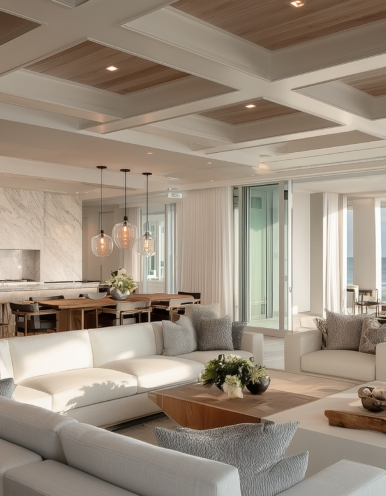
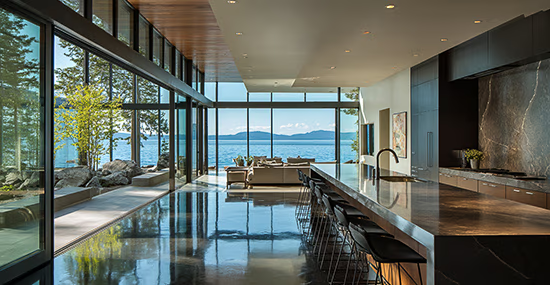
This approach matters most in open, light-filled residences where privacy and exposure must coexist. Security works quietly in the background, never crossing into the foreground of daily life.
The result is trust—earned through restraint, not excess.
Security should never feel added on.
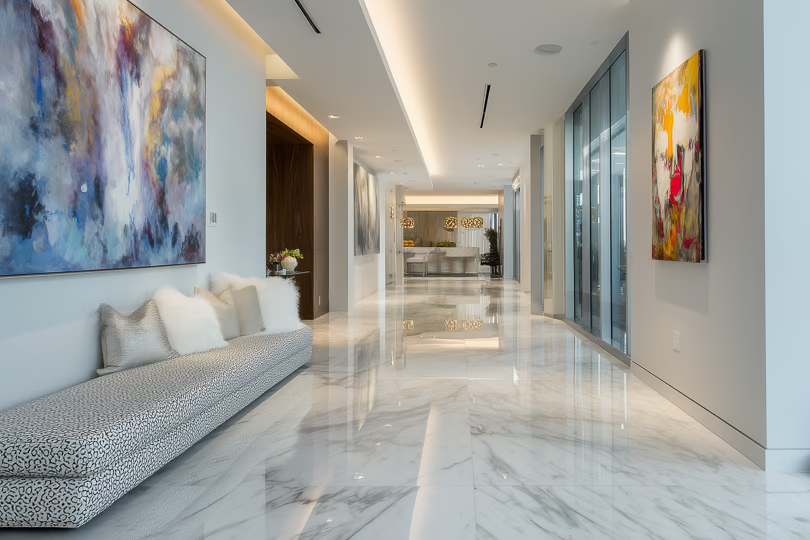
When it’s designed properly, it becomes part of the architecture itself—woven into the structure, the landscape, the flow of the home. Nothing competes with design. Nothing demands explanation.
Video surveillance integrates quietly. Security systems disappear into walls, ceilings, and exterior lines. The home looks exactly as it was intended to look—only now, it’s aware.
This level of integration requires restraint. Discipline. An understanding that security exists to support the space, not dominate it.
What you experience is simplicity: clean lines, uninterrupted views, and a home that feels complete rather than layered.
Protection is present, but invisible.
And that invisibility is the point.
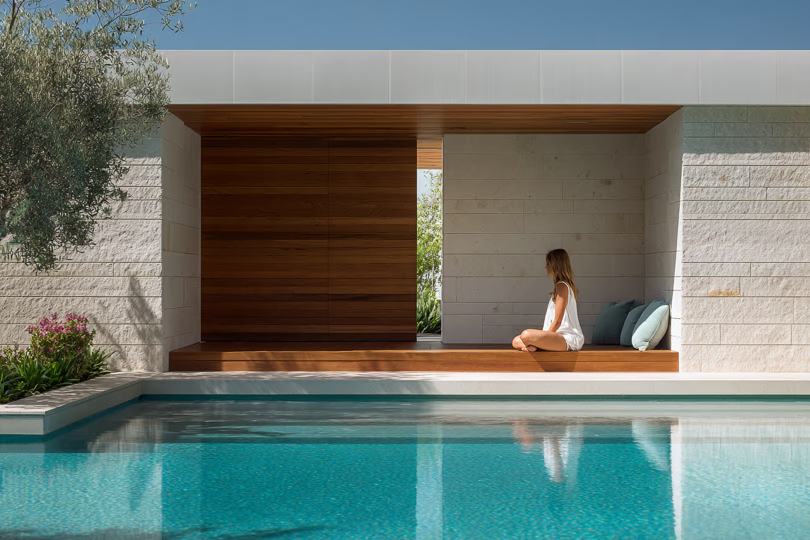
Security works best when it doesn’t interrupt life. When it doesn’t change how a space feels or how people move through it. True protection is quiet, steady, and always present—never performative.
In a well-considered home, security isn’t something you notice turning on or off. It’s simply there, holding the perimeter, watching transitions, understanding what belongs and what doesn’t. Video surveillance becomes part of that awareness, not as an observer, but as a silent witness that only matters when it’s needed.
Inside, the home remains relaxed. Conversations flow. Doors open. Light moves freely. Outside, security maintains awareness without tension or intrusion.
Nothing feels guarded. Nothing feels exposed.
That balance—between openness and protection—is where security stops feeling like a system and starts feeling like care.

Good security isn’t about watching everything. It’s about paying attention to the moments that matter.
Approach paths. Entries. Transitions between public and private space. These are the places where awareness belongs. Surveillance, when done properly, is selective—not constant. Focused, not invasive.
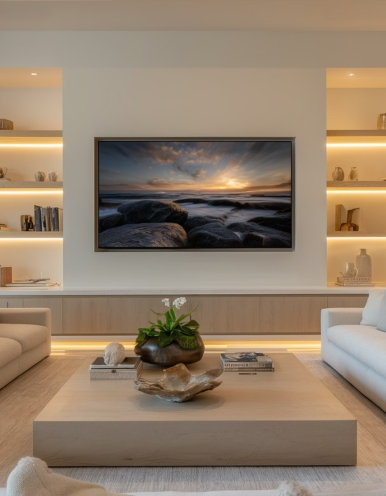
Inside the home, privacy is preserved. No sense of being observed. No unnecessary coverage. Just a quiet understanding that the perimeter is being held.
Security becomes directional. Purposeful. Calm.
This is where surveillance stops feeling intrusive and starts feeling intelligent. The home knows where to look and, just as importantly, where not to.
The result is a space that feels open and personal, while remaining confidently protected—without tension, without explanation.
Security should never feel fragile. It shouldn’t rely on constant checking, alerts, or reassurance. The most effective systems are the ones you stop thinking about—not because they’re absent, but because they’re dependable.
Video surveillance plays a role here, but it’s only part of a larger picture. True security is about continuity. About systems that behave the same way every day, whether you’re home, away for the weekend, or traveling for weeks at a time.
There’s comfort in that consistency.
No surprises. No drama. No constant reminders.
Over time, confidence replaces attention. You trust the home to hold itself. To notice when something is out of place. To remain steady, even when life isn’t.
That’s when security stops being a task and becomes part of the home’s character.
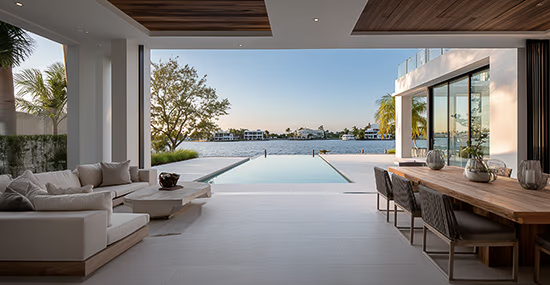
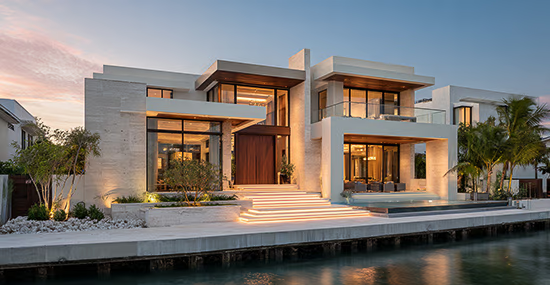
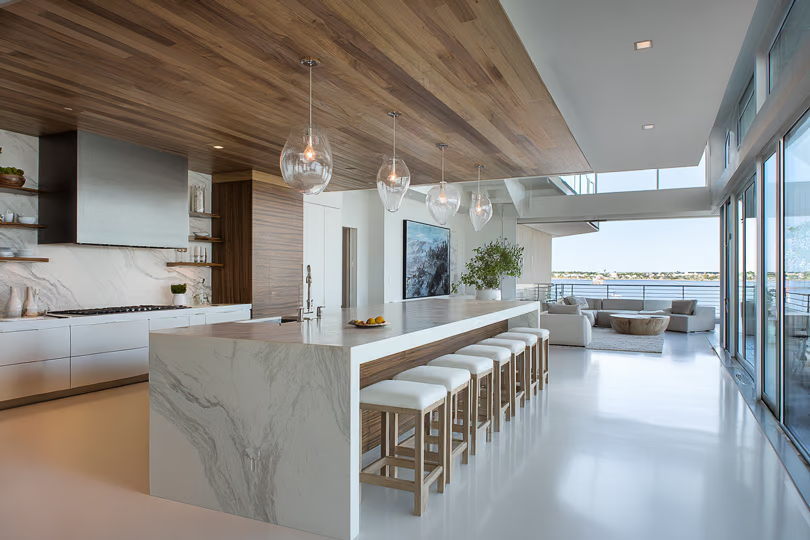
Waterfront homes are defined by openness. Security must honor that. Coverage lives beyond the glass, along transitions and approach paths, allowing interiors to remain light, calm, and uninterrupted. Nothing competes with views or movement. Protection supports the lifestyle rather than reshaping it—quietly reinforcing freedom instead of restricting it.
Yes. Wired PoE systems are our preferred approach for residential security in Miami due to reliability, image consistency, and clean infrastructure. Power and data travel over a single cable, reducing clutter and improving long-term stability.
Wired systems offer consistent performance, higher image reliability, and cleaner installation. Wireless cameras rely on batteries and signal strength, which can introduce gaps over time. For permanent residences, wired infrastructure is typically the better long-term choice.
Recordings are stored on a dedicated NVR placed in a secure, ventilated location. This keeps footage private, reliable, and independent of cloud disruptions while allowing remote access when needed.
Yes. Camera placement is coordinated with architecture and interior design to preserve clean lines and sightlines. Hardware remains discreet, often concealed or visually minimized.
Absolutely. We design systems that respect privacy boundaries, HOA requirements, and property lines—ensuring coverage is intentional and compliant.
Yes. Secure remote access allows you to check your home from anywhere, without compromising privacy or system integrity.
Yes. We design and implement full residential security systems that include professionally monitored protection, active 24/7 through a central monitoring station. Intrusion detection, perimeter security, and system response are handled continuously—whether you’re home, away for the evening, or traveling for extended periods. The system operates quietly in the background, providing real protection without disrupting daily life or design intent.
A properly designed security system works quietly in the background. It focuses on perimeter protection, entry points, and transitional spaces, allowing interior areas to remain calm and private. There’s no sense of being monitored or interrupted. Security adapts to the rhythm of the home, offering protection that feels supportive rather than restrictive.
True security is layered, monitored, and dependable—working quietly behind the scenes, day and night.
Homeowner
We live with doors open most of the year. The system never changes how the house feels—just how confident we are leaving it.

Interior Designer
Nothing interferes with the openness or light. That’s rare with security. It stays completely out of the design conversation.
Builder
This is the kind of security that doesn’t generate callbacks. It works quietly, which clients appreciate long after move-in.
Architect
Open architecture demands restraint. This approach respects that discipline completely.