Light, by design

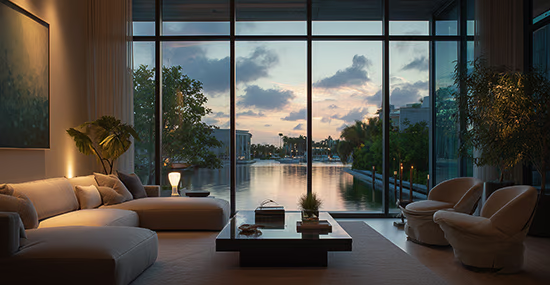
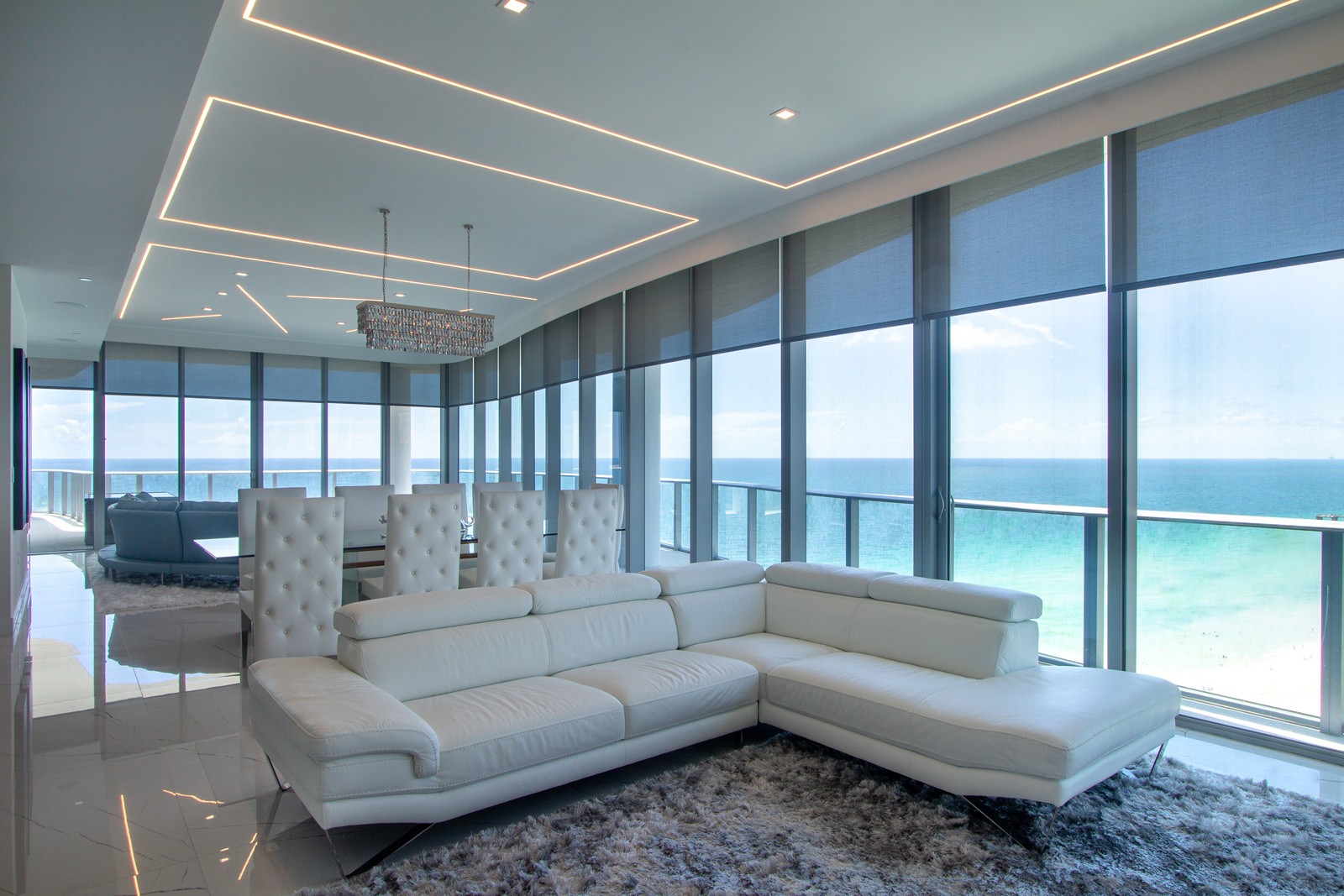
Lighting controls in a South Florida waterfront modern home, designed for daily living rhythms.

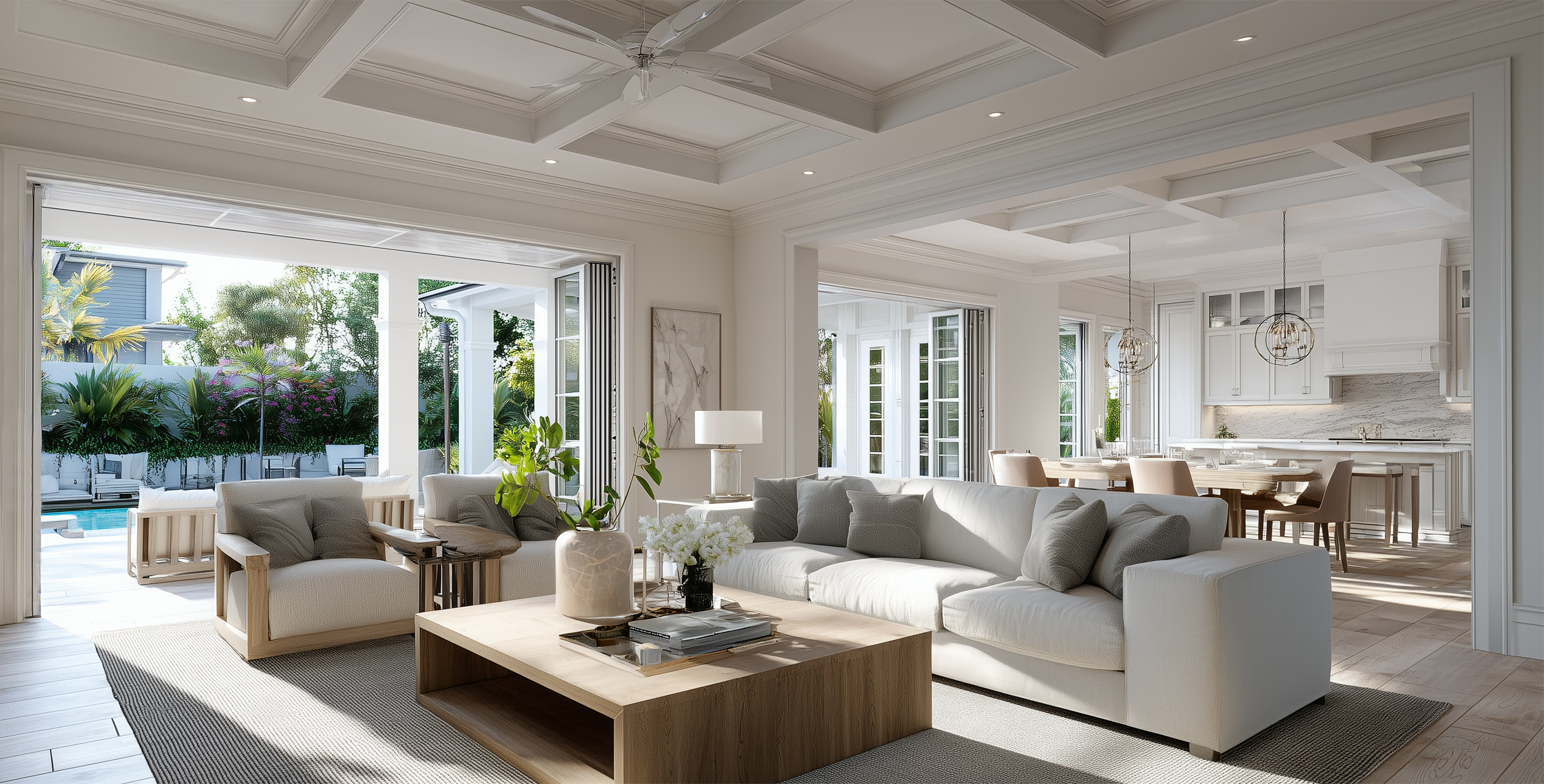
Lighting feels most natural when it aligns with how a home is actually lived in. Over time, illumination settles into a rhythm-supporting early mornings, easing into afternoons, and softening as evenings arrive. The experience never feels managed or adjusted. Rooms are simply comfortable, visually calm, and appropriately lit without thought. This is lighting that feels familiar, not impressive. It responds quietly to daily patterns, allowing spaces to feel intuitive and composed rather than reactive. The result is a home where light behaves with awareness, never asking for attention or explanation.

Frequently asked questions

How much does a whole-home lighting control system cost in South Florida?+

For a professionally designed and installed lighting control system in a South Florida luxury home, most projects fall between $15,000 and $80,000 depending on the size of the home, the number of lighting zones, the control platform, and whether motorized shades are included in the same scope. A centralized Crestron lighting system for a 4,000 to 6,000 square foot home typically runs $25,000 to $50,000 installed - covering all dimmer modules, Horizon keypads, occupancy sensors, and scene programming. Smaller projects using Lutron Caseta or RadioRA can come in below that range. Larger estates or projects with extensive architectural lighting design, high fixture counts, or integration across multiple buildings run higher. These are general ranges - the right number for your home depends on the scope. Contact us for a project-specific estimate.

What is the difference between Crestron and Lutron for whole-home lighting control?+

Both are professional-grade platforms used in luxury residential projects, but they serve different roles. Crestron is a full-home automation platform - lighting is one of many systems it controls, alongside shading, audio, video, climate, security, and access. If the goal is whole-home integration under one interface, Crestron is typically the right choice. Lutron is a dedicated lighting and shading platform, and at that specific job it has few equals. Its RadioRA 3 and Homeworks QSX systems are the standard for high-end residential lighting control, with exceptional reliability, a wide range of keypad finishes, and deep compatibility with third-party platforms including Crestron. Many of our projects use both - Lutron handles the lighting and shading hardware while Crestron handles the broader integration. We've been specifying Lutron for residential clients across Miami-Dade and Broward for years - our Lutron lighting control systems for Miami homes guide explains what makes it the right call for most luxury projects.

What are Crestron Horizon keypads and why do architects specify them?+

Crestron Horizon keypads are the wall control interface for a Crestron centralized lighting system. They replace traditional dimmer plates with a single clean keypad per room that controls lighting scenes rather than individual fixtures. Instead of adjusting five separate dimmers to get a room right, you press one button - "Dinner," "Reading," "Away" - and every fixture in the room moves to its pre-programmed level. Architects and interior designers specify them because they eliminate the bank of dimmer plates that traditional systems require. One elegant keypad per space, with engraving or backlit labels, in finishes that can be matched to hardware throughout the home. The wall stays clean, the design intent stays intact, and the homeowner gets a simpler and more consistent experience.

Can lighting scenes be automated, or do you have to set them manually every time?+

Automation is one of the primary reasons to invest in a centralized lighting system. Crestron and Lutron both support time-based scheduling tied to an astronomical clock - meaning the system knows sunrise and sunset for your location every day of the year and can adjust scenes accordingly without any manual input. Lights warm gradually in the morning, shift to daytime levels, dim toward evening, and turn off at a set time. Occupancy sensors in bathrooms, closets, and utility areas handle those spaces automatically. The homeowner sets the scenes once during commissioning and rarely has to think about lighting again. Override is always available from any keypad, touchscreen, or phone - but the baseline runs on its own.

Is lighting control worth it in a retrofit, or does it only make sense for new construction?+

It works well in both, though the approach differs. In new construction or a full renovation where walls are open, centralized lighting with Crestron or Lutron Homeworks QSX is the standard recommendation - dimmer modules go in the equipment room, low-voltage wire runs to each zone, and clean keypads go on the walls. In an existing home where opening walls isn't practical, Lutron RadioRA 3 provides a wireless alternative that installs without new wire runs and integrates with Crestron or other control platforms. The wireless system has a few limitations compared to hardwired, but for retrofit projects it delivers a meaningful improvement over standard dimmers with minimal disruption. We assess which approach is right based on the home's construction and what the owner is trying to achieve.

How does lighting control integrate with motorized shades and climate?+

In a Crestron-integrated home, lighting, motorized shades, and climate control all operate on the same platform and can be coordinated in a single scene. A "good morning" scene might raise the bedroom shades to 50%, bring the lights up slowly to a warm tone, and set the thermostat to the day setting - all triggered by one keypad button or automatically on a schedule. An "away" scene closes every shade, turns off all lights, and adjusts the setpoint to an energy-saving level. This kind of coordination is only possible when all three systems are managed by the same control platform, which is why we design lighting, shading, and climate together from the start of a project rather than adding them as separate afterthoughts.

Do you handle the lighting design itself, or just the control system?+

Both. Our team handles the full scope - fixture selection, dimming zone layout, scene programming, keypad placement, and control system integration. We work alongside architects and interior designers during the design phase to plan every zone and scene before construction begins. That early coordination is what allows the keypads, occupancy sensors, and dimmer infrastructure to be positioned correctly from the start, rather than retrofitted around a finished design. For projects where a dedicated architectural lighting designer is already on the team, we work with their drawings and translate the lighting intent into the control system. Either way, the result is a system that reflects the design intent of the space rather than a generic room-by-room setup.

Lighting Design & Control

Thoughtful lighting design considers architecture, daylight, and how spaces are used throughout the day. When paired with professionally installed lighting control systems, the result is a home that feels balanced, calm, and visually consistent-without constant adjustment.

What Clients Say

Get the Light Right

The space decides. We consider structure, daylight, and how the space is actually lived.
(954) 251-0600