Home Automation System Integration - Miami & South Florida

Technology designed with intention for select South Florida homes

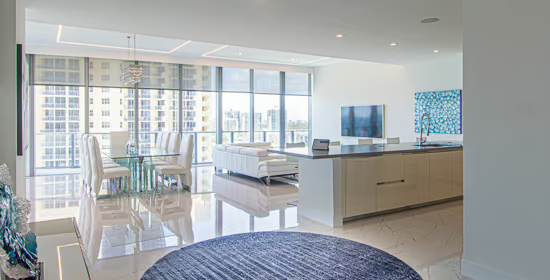
Systems integration in a South Florida Miami penthouse, designed for elevated living.

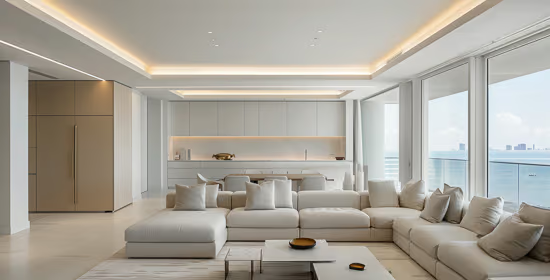
High-rise living demands restraint. Concrete structures, shared systems, and refined interiors leave little margin for visual noise or improvisation. When integration is handled thoughtfully, residences feel calm regardless of scale or elevation. Light adapts to the skyline. Privacy holds without effort. Spaces remain visually pure while responding gracefully throughout the day-creating penthouses and condos that feel composed, intentional, and quietly self-aware.

Frequently asked questions

How much does whole-home systems integration cost in South Florida?+

Most whole-home integration projects in South Florida fall between $30,000 and $150,000 depending on the scope, the number of systems being tied together, the control platform, and the size of the home. A mid-range project integrating lighting, motorized shades, distributed audio, climate, and security under Crestron in a 5,000 to 8,000 square foot home typically runs $50,000 to $100,000 installed. Larger estates with home theater, video distribution, robust networking, and extensive outdoor systems run higher. Projects that involve only a few systems can come in well below that range. Contact us for a scope-specific estimate.

For a Crestron-specific breakdown by scope tier, plus how to keep programming costs in check on a Crestron Home build, see our 2026 Crestron smart home cost guide.

What does whole-home systems integration actually mean?+

It means every technology system in the home - lighting, motorized shades, audio, video, climate, security, access control, and networking - operates under a single control platform rather than as a collection of separate apps and remotes. In practice, a homeowner presses one button and a scene executes across multiple systems simultaneously: lights set to a scene, shades lower, music starts in the right zones, the thermostat adjusts. The experience is consistent across every room and every interface, whether that's a wall keypad, a touchscreen, or a phone. The alternative - separate apps for each system, none of which know the others exist - is what most homes end up with when technology is added piecemeal rather than designed from the start.

What control platform do you work with?+

We work primarily with Crestron for whole-home integration. It's the platform we specify on the majority of our luxury residential projects because of its depth of integration, long-term reliability, and the level of customization it allows across every system in the home. Crestron handles lighting, shading, audio, video, climate, security, and access control under one processor with one interface - which is what makes the seamless experience possible. For clients who want to understand why we spec it as often as we do, our guide to why Crestron is the right platform for homes like this covers the full picture. For specific subsystems where another platform is the stronger choice - commercial networking, for example - we spec accordingly and ensure it integrates cleanly with the Crestron core.

Why does the physical wiring and cabling matter as much as the hardware?+

Because every system in the home depends on it. Clean, labeled, and properly routed cabling is the foundation of any integration project - our overview of low voltage wiring for smart systems explains why the physical layer matters as much as the hardware above it. A rack full of quality equipment connected to disorganized or improperly terminated cabling will underperform and become difficult to service. Conversely, a well-documented, properly routed infrastructure makes troubleshooting straightforward, expansion clean, and the system easier to hand off years from now. Every project we complete includes structured cabling documentation - each cable labeled, each run recorded, each device assigned a documented IP address.

When in a project should a systems integrator be brought in?+

As early as possible - ideally during schematic design before construction plans are finalized. The decisions that most affect how well a home's technology performs are made before the first wall goes up: where the equipment room sits, how conduit is routed, where keypads and sensors land relative to architectural details, how the electrical panel is configured. Bringing an integrator in after construction is framed forces compromises that pre-construction planning eliminates. We work directly with architects and interior designers during the design phase - see how we approach that collaboration on our design partners page. For existing homes, we assess the construction and design around what's there. The earlier we're involved, the better the outcome and typically the lower the overall cost.

How does a Crestron system handle power or internet outages?+

A properly designed Crestron installation includes UPS units in the equipment rack that keep the control processor, network switches, and critical components running through brief power interruptions without any disruption. For extended outages the system returns to a known state on restart rather than requiring manual reset of every subsystem. Local control - keypads, touchscreens, and in-room interfaces - continues to function for lighting and shading even when internet is lost, since those systems run on the home's local network rather than cloud-dependent servers. For clients in South Florida where power events are a real consideration, we also coordinate with the energy management system design where generator integration is part of the scope.

Do you provide support and maintenance after installation?+

Yes. Technology systems require ongoing attention to perform the way they did on day one. Software updates, hardware monitoring, and periodic calibration all contribute to long-term reliability. We offer remote monitoring, preventive maintenance visits, and direct support through our client care program. Remote monitoring allows us to identify and resolve most issues before the homeowner notices them. For clients who want the most hands-off experience, a maintenance agreement keeps the system current and gives them a direct line to our team when anything needs attention. You can also see the kind of work we stand behind in our project portfolio - the same homes we install are the ones we support long-term.

What is Systems integration?

Systems integration is the discipline behind a home automation installation that feels effortless-because it was designed into the structure, not added at the end.

What Clients Say

Resolve the system before the space is finished.

Share your plans or constraints, and we’ll outline an approach that protects design intent and long-term comfort.
(954) 251-0600