Jessica Davies
Interior Designer
The shades never interfere with the space. They preserve every line we worked so hard to create. Clients feel the comfort immediately-but never see the mechanism behind it.

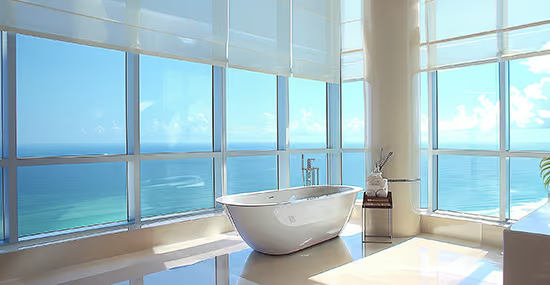
Mornings don’t arrive all at once. Shades allow bedrooms to wake gradually, protecting rest while welcoming light in measured layers. No alarms of brightness. Just a natural transition from sleep to day.

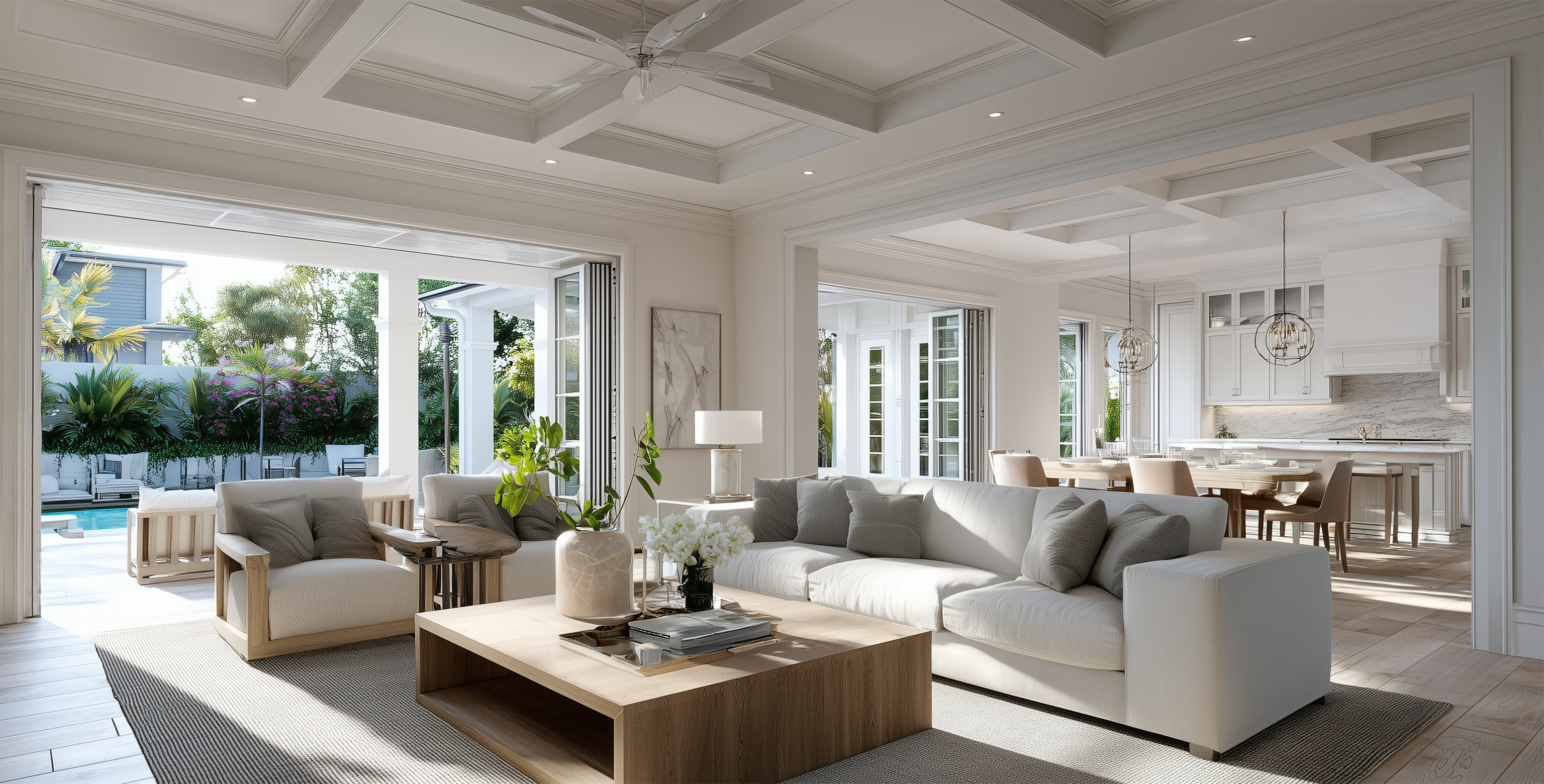
Sunlight enhances materials-until it overwhelms them. Shades moderate heat and glare so living spaces remain inviting at every hour, even when the Florida sun is at its strongest.

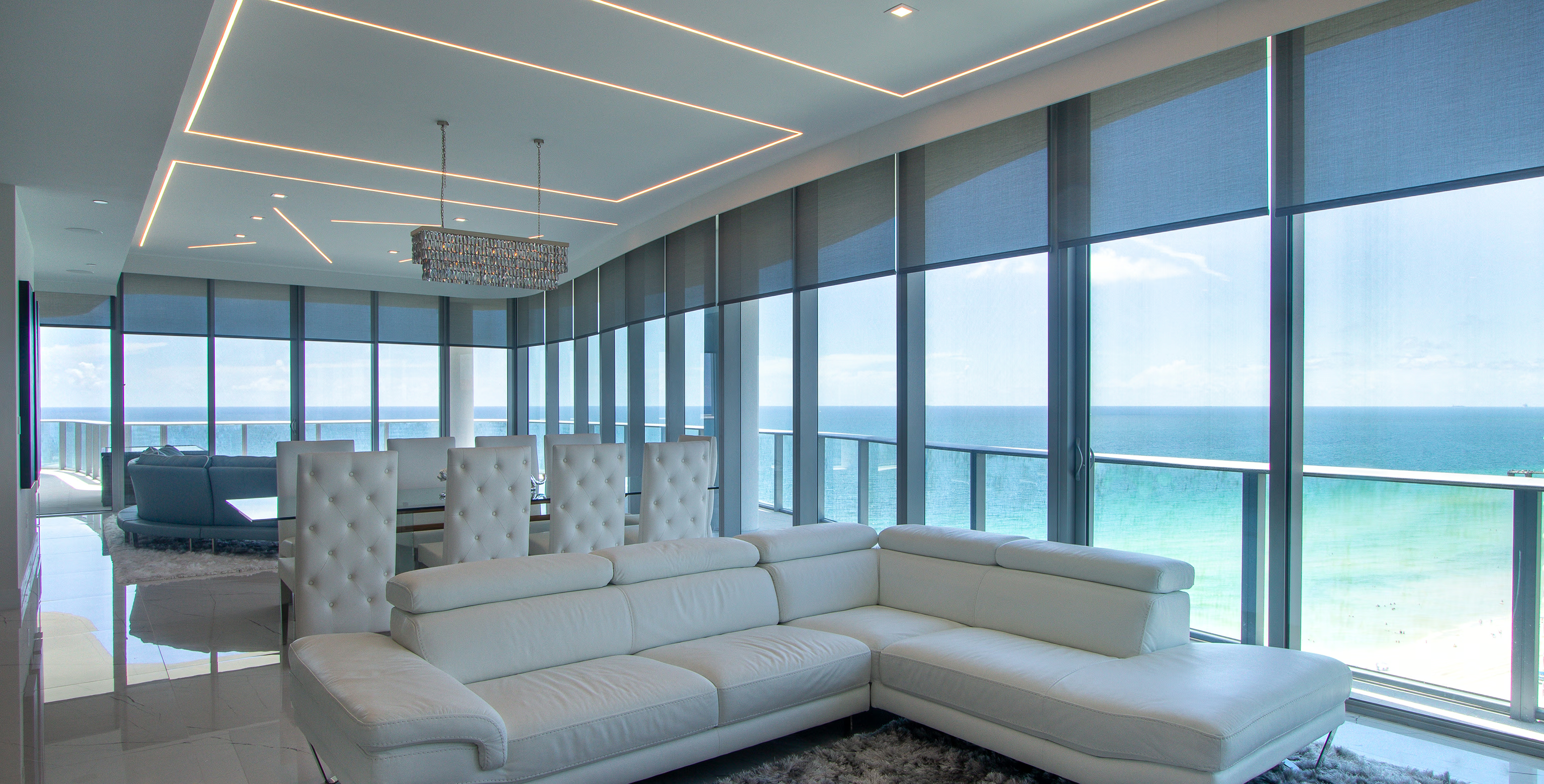
The horizon matters. Shades are selected and positioned to preserve views while softening intensity. You see the water. You feel the calm. Nothing feels sacrificed.

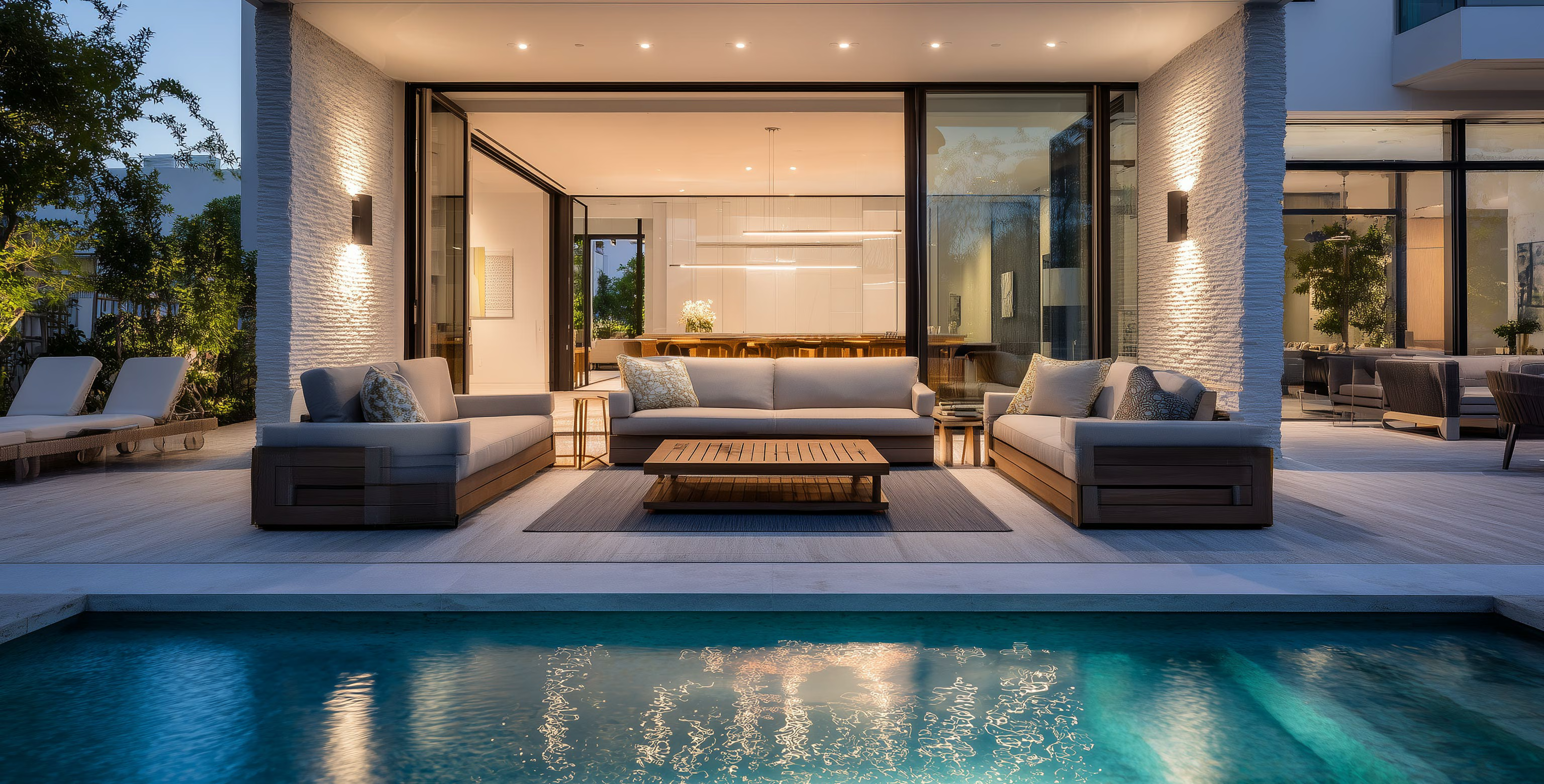
As daylight fades, interiors shift again. Shades lower the outside world gently, allowing interiors to glow without exposure. Evening feels intentional, not closed off.

Shades should never compete with architecture. Fabrics, recesses, and movement are chosen so design remains uninterrupted. The technology disappears entirely.
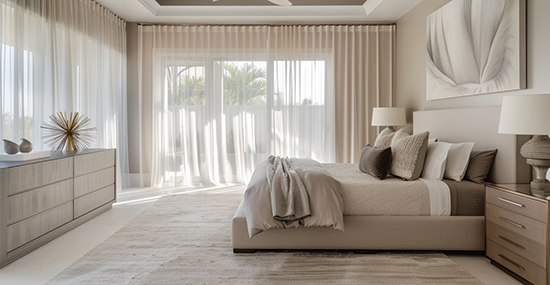
Light defines volume before walls ever do. Window shades shape how spaces breathe-how materials reveal themselves, how edges soften, how rooms feel larger or more intimate without changing a single line. When daylight is guided instead of blocked, architecture remains the hero. Nothing competes. Nothing interrupts. Just space, behaving beautifully throughout the day.
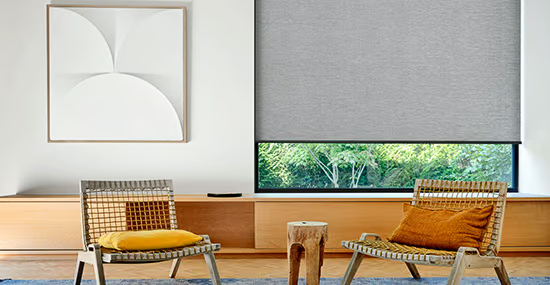
Shades use a continuous piece of fabric that rolls up or folds, while blinds use horizontal or vertical slats that tilt and stack. In South Florida luxury homes, roller shades and Roman shades are far more common than blinds - they sit cleaner in the window opening, work better with large glass spans, and integrate more reliably with home automation systems. Most of what we install is shade-based, though the terms get used interchangeably in casual conversation.
They work in both. New construction gives you the option to build shade pockets directly into the ceiling, which produces the cleanest look - the shade disappears completely when raised. In an existing home, surface-mounted cassettes handle the same function and look sharp when specified correctly. The control wiring is the bigger consideration in a retrofit; wireless shade systems like Lutron RadioRA 3 eliminate most of the in-wall wiring requirement, which makes existing homes much more practical to work with. We handle both scenarios regularly across Miami, Fort Lauderdale and Palm Beach
A focused installation covering a single room or a small condo might come in at $3,000 to $6,000 installed. For a typical luxury home in South Florida, a professionally installed motorized shade system runs between $15,000 and $80,000 depending on window count, fabric selection, and whether the shades are integrated into a broader home automation platform. A full estate with 30 to 50 shades across multiple exposures, pocket installation, and Crestron or Lutron integration sits at the higher end of that range - and larger waterfront properties with extensive outdoor coverage can go beyond that. The fabric itself - openness factor, UV rating, blackout vs. solar - affects cost, as does whether the project is new construction or a retrofit into a finished home. We provide detailed estimates after a site visit, which is the only honest way to price a shading project accurately.
Both Lutron and Crestron manufacture their own native shade systems - Lutron's Sivoia QS and Palladiom lines, and Crestron's own shading platform - so if the home is already running either of those control systems, shades from the same manufacturer are the cleanest integration path. That said, both platforms also integrate with each other reliably. A Crestron-controlled home can run Lutron shades through a direct, well-documented driver, and vice versa. In either case, shades can be grouped into lighting scenes, put on schedules, and included in whole-home away modes without any workaround. We cover how this plays out in practice in our guide to motorized shades for South Florida sunlight.
It depends on the room's orientation and how you use the space. East and west-facing rooms benefit from tighter openness factors - 1% to 3% - to manage direct sun and glare during peak exposure hours. South-facing rooms with more diffused light can often use a 5% fabric and still maintain good views. Bedrooms and home theaters need blackout fabric. High-performance solar fabrics block up to 99% of UV radiation, which matters in a climate where unprotected furniture and flooring fades faster than most homeowners expect. Both Lutron and Crestron offer extensive fabric libraries through their authorized dealers - Crestron even offers a Pantone color matching service for fully custom roller shade colors. We help with fabric selection as part of every installation - it's not a decision that should be made from a catalog alone.
Yes, in a measurable way. Research from the Florida Solar Energy Center found that interior shades with reflective properties can reduce cooling loads by 20 to 30 percent in high-solar-gain situations. In South Florida, where air conditioning runs most of the year and solar gain through glass is one of the biggest contributors to that load, shades that close automatically during peak sun hours make a real difference. The key word is automatically - shades that stay up because nobody remembered to lower them don't save anything. Integrated automation is what makes the energy benefit reliable. For more on how this connects to broader energy management, see our HVAC and climate control page.
Yes. Both Crestron and Lutron shade systems both support remote access through mobile apps, so you can raise, lower, or adjust any shade from anywhere with an internet connection. For seasonal properties or homes that sit empty for extended periods, remote control also lets you vary the shade position on a schedule - which keeps the home looking occupied and reduces heat gain while you're away. Combined with remote security monitoring, it's one of the more practical technology investments for South Florida's part-time resident market. We install and support motorized shade systems throughout Miami, Coral Gables, Brickell, Fort Lauderdale, and the surrounding area.
Morning arrives gently. Afternoon glare never interrupts. Evening privacy settles without a thought.
Your home already knows when and how motorized window shades need to be.
Interior Designer
The shades never interfere with the space. They preserve every line we worked so hard to create. Clients feel the comfort immediately-but never see the mechanism behind it.
Homeowner
Our home feels calmer throughout the day. The light is always right, and the movement is completely silent. It’s one of those features you stop noticing-because it’s always correct.
Architect
What impressed me most was restraint. Nothing added visually. Everything respected the architecture. That discipline is rare-and essential.
Builder
Clients don’t call with questions. They just live in the space. That’s the best outcome we can ask for.