Outdoor TV for South Florida Homes | Geeks of Technology
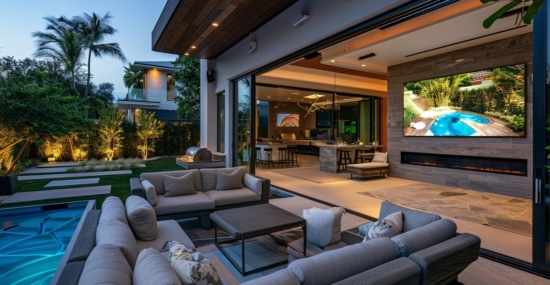
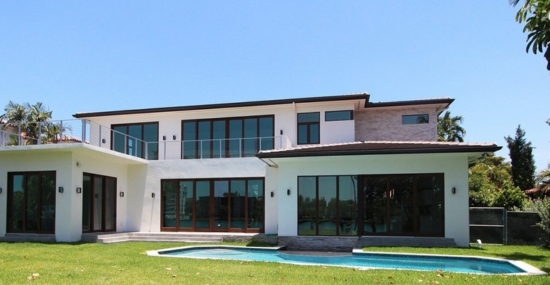
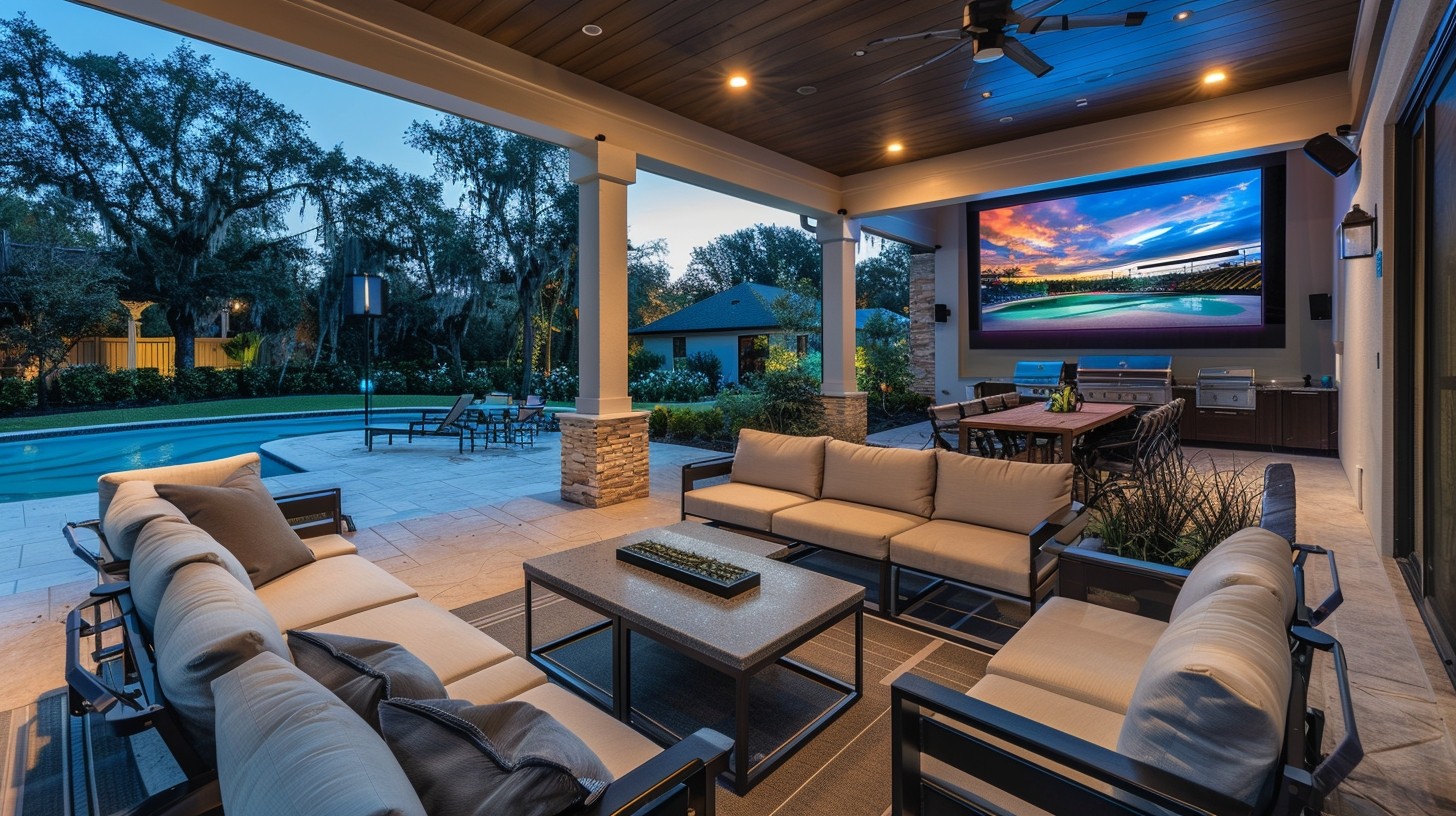
South Florida outdoor living spaces are built around the pool, the patio, and the year-round weather that makes both usable twelve months a year. The display is often the last thing specified and the first thing that disappoints — either because an indoor TV was moved outside and failed within a season, or because the brightness, weatherproofing, and mounting weren’t considered before purchase. Here’s what actually matters when specifying an outdoor television for a luxury property.
1. Brightness Is the First Specification That Matters
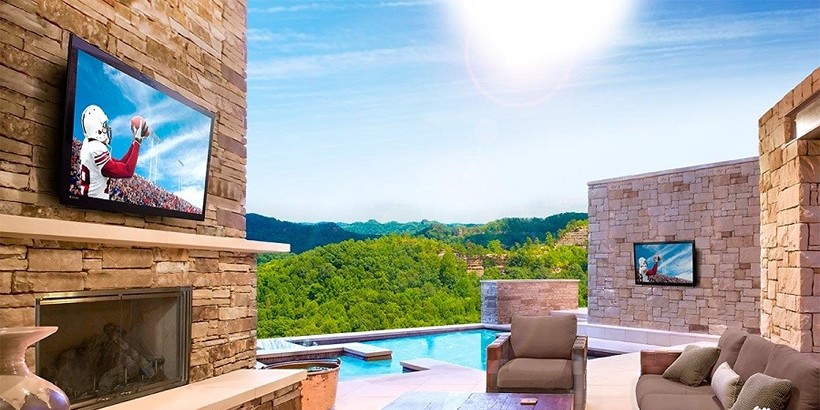
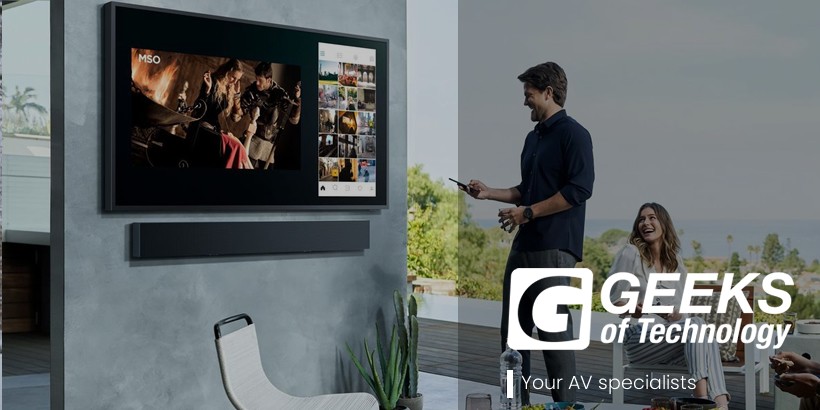
A standard indoor television produces between 250 and 500 nits of brightness. In direct South Florida sunlight, that output is effectively invisible. Purpose-built outdoor displays like the SunBrite Veranda and the Samsung Terrace are rated at 1,000 nits or higher, with anti-reflective glass that further reduces glare. The image remains visible and accurate in conditions that would wash out any indoor panel completely.
This is not a minor specification difference — it determines whether the display is usable at all during daytime hours, which in South Florida represents most of the day for most of the year.
2. Weatherproofing Is an Engineering Standard, Not a Feature
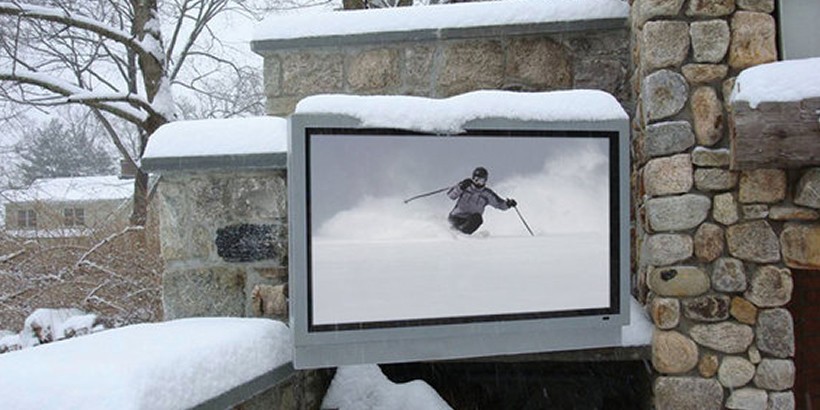
Outdoor-rated televisions carry IP ratings that define their resistance to dust and water ingress. SunBrite’s full-shade and partial-sun models are rated for direct rain exposure, extreme heat, and cold temperatures — none of which are concerns in South Florida, but salt air and humidity are. SunBrite’s sealed electronics and corrosion-resistant hardware are specifically relevant for coastal properties in Miami, Fort Lauderdale, and the surrounding areas where salt air degrades unprotected electronics quickly.
An indoor television placed outdoors under a covered area will fail from humidity and insects within one to two seasons regardless of how sheltered the location appears. The weatherproofing on a purpose-built outdoor display protects the panel, the electronics, and the connection points — all of which are exposed to the coastal environment even in covered installations.
3. Integration with the Home AV System
A standalone outdoor television connected to a streaming stick is a workable consumer solution. For a luxury property, the outdoor display should integrate with the same dedicated home theater installation platform that controls the interior — same sources, same control interface, same user experience whether you’re inside or on the patio.
Crestron-controlled AV distribution extends sources from the equipment rack to outdoor displays without visible cabling at the television. The homeowner selects the source from a keypad or app — the same one used for every other room. The outdoor zone can also be incorporated into the whole-home distributed audio system so music and video sources are shared across indoor and outdoor spaces seamlessly.
4. Wireless Signal Distribution
Outdoor televisions support wireless HDMI transmitters for signal delivery where running concealed cabling to the mounting location isn’t practical. For new construction or renovation projects where conduit can be planned in advance, a hardwired connection is always preferable — more reliable, no latency, no interference from other wireless devices in the environment. For retrofits, a quality wireless HDMI transmitter is a practical alternative.
5. Audio for the Outdoor Environment
Outdoor environments absorb sound differently than enclosed rooms. The built-in speakers in an outdoor television — even a well-specified one — are not sufficient for a patio or pool deck where ambient noise from wind, water features, and surrounding activity competes with the audio. A paired weatherproof soundbar or integration into the property’s distributed audio for outdoor spaces produces a dramatically better result. Sonance landscape speakers, for example, are designed to cover large outdoor areas at levels that remain clear over ambient noise without being intrusive to neighbors.
Can You Use an Indoor TV Outdoors?
No. The reasons are practical, not precautionary. An indoor television outdoors will produce a picture that’s invisible in daylight, fail from humidity within one to two seasons, void its warranty immediately, and create a safety risk if moisture reaches the electronics. The cost difference between an indoor television and a purpose-built outdoor display is not a reason to compromise — the outdoor display will outlast several replacement cycles of an indoor TV used in the same environment.
Motorized Projection Screens
For clients who prefer a larger format or want the display to disappear completely when not in use, motorized outdoor projection screens are an alternative to a fixed television. Our preferred manufacturer is Screen Innovations, whose outdoor screens are engineered specifically for ambient light rejection — producing a high-quality image even in partially lit conditions without requiring total darkness. The screen retracts into a housing when not in use, leaving the outdoor space unobstructed.
Ready to Specify Your Outdoor Display?
Our team specifies and installs outdoor displays, audio, and integrated AV systems for luxury properties throughout South Florida. Call us at (954) 251-0600 or use the contact form to discuss your project.
You might also enjoy