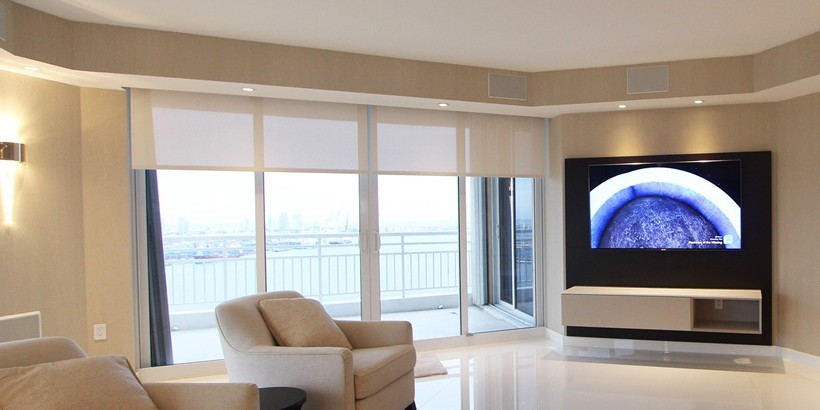
Motorized blinds – are they worth it?
Motorized Blinds and Shades – Are They Worth It?
It’s a fair question. Motorized shades cost more than manual blinds, they require installation, and on the surface they do the same thing – block light and provide privacy. So what actually justifies the difference?
Having installed motorized shading systems across hundreds of South Florida homes, the answer is almost always yes – but not for the reasons people expect when they first ask. The convenience factor gets mentioned most in conversations, but the real value shows up in UV protection, energy performance, and how well the shades integrate with the rest of the home’s systems. Here’s an honest breakdown.
1. They Protect Furniture, Art, and Flooring From UV Damage
This one matters more in South Florida than just about anywhere else in the country. Year-round sun exposure at this latitude is hard on interiors. Hardwood floors fade. Upholstery washes out. Art and area rugs lose color faster than most homeowners realize until the damage is already done.
Motorized shades come in a range of opacity levels – from light-filtering sheers that reduce glare while preserving the view, to room-darkening and blackout fabrics that block UV entirely. A well-specified solar shade fabric can block 95 percent or more of UV radiation while still allowing diffused natural light into the room. For collectors, that protection is significant. For anyone with custom furniture or imported flooring, it adds up over time.
2. They Reduce Energy Costs – Especially Here
South Florida’s cooling load is one of the highest in the country. Air conditioning runs most of the year, and solar heat gain through glass is one of the biggest contributors to that load. The right shade fabric on a west-facing window in the afternoon can meaningfully reduce the heat entering a room – which means the HVAC system works less to maintain the same temperature.
When shades are integrated with a lighting control system and a thermostat, the impact compounds. The system lowers shades automatically as the sun moves across the facade, adjusts interior lighting to compensate, and keeps the home balanced without anyone managing it manually. That kind of coordinated control is where the energy savings actually become measurable – not from a single shade, but from shades working as part of a larger system.
3. The Convenience Factor Is Real
Floor-to-ceiling windows are standard in high-end South Florida construction. They look extraordinary. They also mean large, heavy shades that would be genuinely inconvenient to operate manually – especially when you have eight of them across a great room, or pocket shades tucked into the ceiling above a wall of glass.
Motorized shades solve that practically. A single keypad scene lowers every shade in the living area at once. A scheduled automation raises them at sunrise. A “goodbye” scene closes everything when the home is empty. For seasonal properties that sit unoccupied for months, that scheduling also serves a security function – shades moving on a pattern make the home look lived in when it isn’t.
Control options include wall keypads, touchscreens, mobile apps, and voice control. On integrated systems, shades respond alongside lighting and climate – so “movie time” dims the lights, closes the shades, and drops the temperature, all from one button.
4. The Design Options Have Caught Up With the Technology
Early motorized shade systems weren’t always known for their aesthetic range. That’s changed. Lutron’s Palladiom and Sivoia lines, Crestron Shading Solutions, and other premium shade platforms now offer hundreds of fabric options – from sheer linens to room-darkening wovens, in custom colors and widths.
Crestron’s color matching service goes further – you can specify any color from the Pantone spectrum and have roller shades manufactured to match. For interior designers working on a tight material palette, that flexibility matters. Cassette options, hem bar profiles, and fascia details are all specifiable, so the hardware integrates cleanly with the architecture rather than sitting in front of it.
5. Cordless Means Safer and Cleaner
Motorized shades have no pull cords or chains. For households with young children or pets, that’s a genuine safety consideration – corded window coverings are a recognized hazard, and the elimination of cords removes it entirely. Beyond safety, the absence of cords also simplifies the look. No dangling hardware, no tangled chains, nothing to catch on furniture or interfere with the window reveal.
6. They Support Home Security When You’re Away
A home with shades frozen in the same position for weeks signals vacancy. Motorized shades on a schedule – or controlled remotely through an app – let you vary the position from anywhere. Combined with a security and monitoring system, it’s a practical layer of deterrence for South Florida properties that sit empty during off-season months.
Remote access also means you can close shades ahead of a storm, respond to unexpected weather, or check on the home’s status without being there in person.
So – Are They Worth It?
For a single window in a secondary room, manual shades are fine. But in a home where the architecture features significant glass, where the interior finishes are worth protecting, and where the other systems in the house are already integrated – motorized shades pay for themselves in ways that are easy to quantify and others that are harder to put a number on but immediately obvious when you live with them.
The clients who ask whether they’re worth it before installation are almost always the same ones who say they wouldn’t go back after living with them for six months.
Once you’ve decided they’re worth it, the next step is finding someone who installs them properly – that’s where our motorized window shades installation service comes in. We handle fabric selection, system integration, programming, and coordination with your architect or interior designer from the start.
Call us at (954) 251-0600 or visit our contact page to talk through your project.
You might also enjoy


