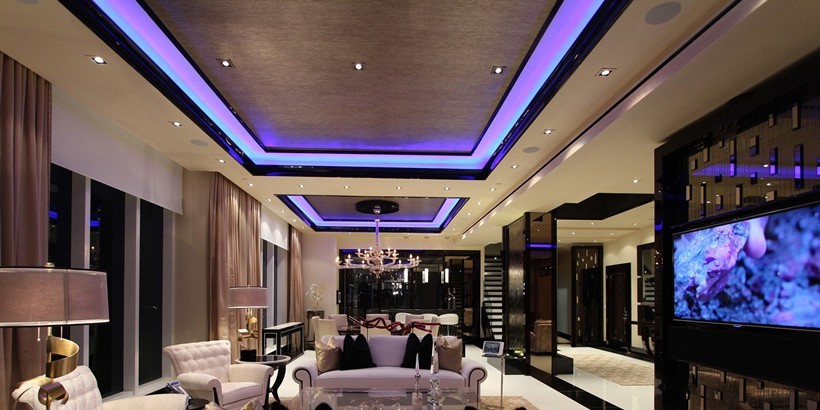
10 brilliant ways to use smart lighting in your home
10 Different Ways to Use Smart Lighting at Home
Smart lighting has evolved far beyond simple dimmers and color-changing bulbs. Modern lighting systems can improve comfort, energy efficiency, security, sleep quality, entertainment spaces, and even the overall atmosphere of a home.
In professionally designed smart homes, lighting is often treated as part of the architecture itself. The right lighting design can completely change how a room feels while making the home easier to live in every day.
Most advanced lighting systems combine intelligent controls, automated scenes, occupancy sensors, dimming technology, motorized shading, and architectural fixtures that work together behind the scenes.
Many of the ideas below require proper fixture selection, programming, low voltage infrastructure, and lighting design planning. Our smart lighting design and control systems service helps homeowners integrate these technologies into both new construction and renovation projects.
For lighting that responds to time of day, occupancy, and mood, our Lutron lighting control for South Florida homes guide covers what modern lighting systems can actually deliver in real residential environments.
1. Create Lighting Scenes for Different Activities
One of the biggest advantages of smart lighting is the ability to create scenes that instantly change how a room feels. Instead of controlling lights one switch at a time, lighting scenes adjust multiple fixtures together based on the activity happening in the space.
For example, a “Movie Night” scene may dim overhead lights, activate low-level accent lighting, and lower motorized shades automatically. A “Dinner” scene may create warmer and softer lighting around the dining area, while a “Cleaning” scene increases brightness throughout the room.
Professional lighting systems also allow scenes to activate from touch panels, mobile apps, voice assistants, occupancy sensors, or scheduled automation.
2. Improve Home Security with Automated Lighting
Lighting plays a major role in residential security. Automated lighting schedules can make the home appear occupied while you are away, helping reduce the appearance of an empty property.
Exterior lighting can also activate automatically when motion is detected near entry points, driveways, pathways, or outdoor living spaces. Some systems integrate directly with cameras, alarm systems, and smart locks for additional automation.
Research in residential security consistently shows that visible exterior lighting and occupancy simulation can help discourage opportunistic intrusions.
For more advanced protection, our security and video surveillance systems can integrate directly with smart lighting scenes and motion detection.
3. Adjust Color Temperature Throughout the Day
Modern lighting systems can adjust not only brightness, but also color temperature. This is often referred to as tunable white lighting or human-centric lighting.
Cooler white light during the morning and daytime can help improve alertness and focus, while warmer light during the evening creates a more relaxing environment. Research into circadian lighting has shown that lighting exposure can influence sleep patterns, mood, and overall comfort.
Many luxury homes now use automated lighting schedules that gradually shift color temperature throughout the day to better align with natural daylight cycles.
4. Enhance Entertainment Spaces
Smart lighting can dramatically improve entertainment areas including home theaters, media rooms, game rooms, and outdoor entertainment spaces.
LED accent lighting, cove lighting, wall washing, and low-level pathway lighting can create a more immersive environment while reducing glare on screens and displays.
Some systems can even synchronize lighting effects with music, movies, or gaming environments.
For dedicated entertainment spaces, our home theater installation services combine lighting, audio video systems, acoustics, and automation into a fully integrated experience.
5. Control Lighting from Your Phone or Touch Panel
Modern lighting systems allow homeowners to control lights from mobile devices, wall keypads, touch panels, or voice assistants.
Instead of walking through the house turning lights on or off individually, homeowners can manage multiple rooms instantly from a single interface. This becomes especially useful in larger homes where lighting zones are spread across multiple floors or outdoor areas.
Professional lighting systems also allow personalized interfaces with labeled scenes, room groupings, and automated scheduling.
6. Use Architectural Lighting to Highlight Design Features
Lighting is one of the most effective ways to emphasize architectural details and interior finishes. Properly placed accent lighting can highlight textured walls, artwork, cabinetry, shelving, staircases, ceiling details, and outdoor landscaping.
Wall washing and grazing techniques are commonly used in luxury residential design because they add depth and visual interest without overwhelming the space.
Linear LED lighting has also become extremely popular for floating vanities, under-cabinet lighting, ceiling reveals, wine rooms, and indirect ambient lighting.
7. Improve Sleep and Wake-Up Routines
Lighting has a direct relationship with the body’s circadian rhythm. Exposure to cooler blue-enriched light during the evening can interfere with melatonin production and make it harder to fall asleep.
Many smart homes now use automated evening lighting scenes that gradually shift toward warmer color temperatures as bedtime approaches. Some systems can also simulate sunrise in the morning by slowly increasing brightness levels instead of relying on traditional alarm clocks.
Research in sleep science continues to show that lighting conditions can affect sleep quality, alertness, and overall daily comfort.
8. Receive Notifications Through Lighting
Smart lighting systems can also act as visual notification systems throughout the home.
For example:
- Exterior lights can flash when someone arrives at the front gate
- Hallway lights can pulse if an alarm is triggered
- Kitchen lights can change color when a package delivery arrives
- Garage lighting can activate when the security system is disarmed
These types of automations are especially useful in larger homes where audible alerts may not always be heard.
9. Add Smart Outdoor and Landscape Lighting
Outdoor lighting improves both aesthetics and usability around the property. Landscape lighting can highlight architectural features, trees, walkways, pools, patios, and outdoor entertaining areas while also improving nighttime visibility and safety.
Modern outdoor lighting systems can automatically adjust based on sunset times, occupancy, weather conditions, or scheduled events.
Integrated outdoor lighting is also becoming increasingly popular in waterfront homes and luxury outdoor living spaces throughout South Florida.
10. Reduce Energy Usage with Sensors and Automation
Occupancy sensors, vacancy sensors, daylight harvesting, and automated dimming can significantly reduce unnecessary energy consumption.
Instead of leaving lights on throughout the home, smart systems can automatically turn lights off in unused rooms or adjust brightness levels based on available natural daylight.
Studies on commercial and residential lighting automation have shown measurable reductions in lighting-related energy usage when occupancy and daylight controls are implemented correctly.
Motorized shading systems can also work together with lighting automation to reduce solar heat gain and improve overall efficiency. Our motorized blinds and shade systems integrate directly with smart lighting scenes and environmental controls.
Why Professional Lighting Design Matters
The fixture itself is only one part of the equation. Proper lighting design also depends on beam spread, color rendering, dimming compatibility, fixture placement, architectural integration, and control programming.
Many DIY smart lighting products work well for basic rooms, but larger homes and luxury properties usually require centralized control systems, low voltage infrastructure, and professional-grade dimming solutions to achieve reliable long-term performance.
Proper planning also helps avoid common problems such as flickering LEDs, uneven dimming, harsh glare, incompatible fixtures, or overloaded wireless networks.
Final Thoughts
Smart lighting is no longer just a convenience feature. It has become an important part of modern home design, wellness, security, and everyday comfort.
Whether you are building a new home, renovating an existing property, or upgrading specific rooms, the right lighting strategy can completely change the way the home looks and feels.
To discuss your lighting project with our team, visit our contact page or call (954) 251-0600.