Jessica Davies
Interior Designer
The shades never interfere with the space. They preserve every line we worked so hard to create. Clients feel the comfort immediately—but never see the mechanism behind it.
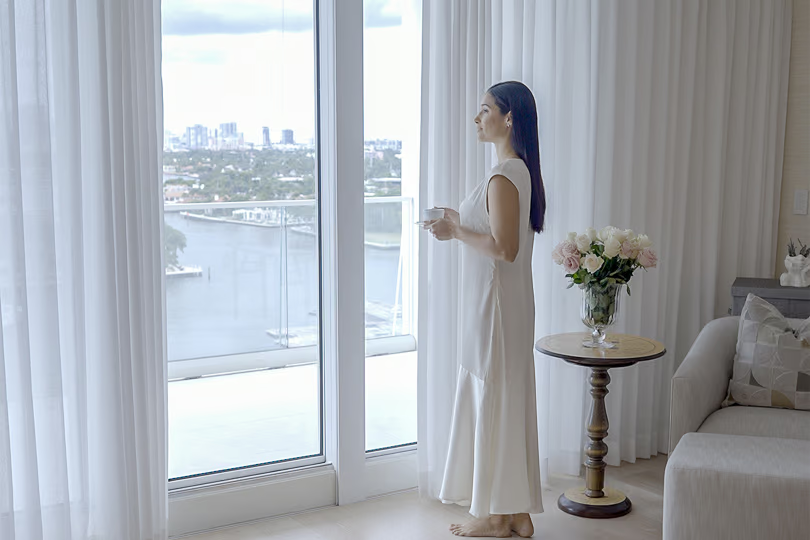
Mornings don’t arrive all at once. Shades allow bedrooms to wake gradually, protecting rest while welcoming light in measured layers. No alarms of brightness. Just a natural transition from sleep to day.

Sunlight enhances materials—until it overwhelms them. Shades moderate heat and glare so living spaces remain inviting at every hour, even when the Florida sun is at its strongest.
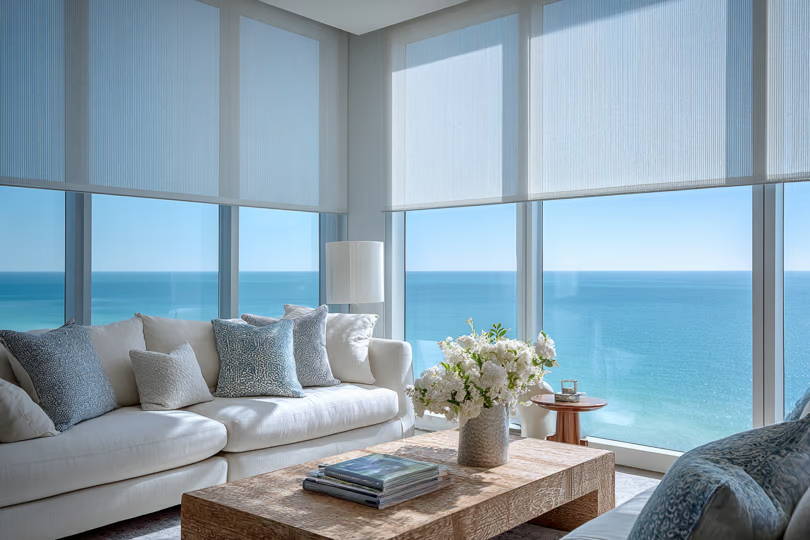
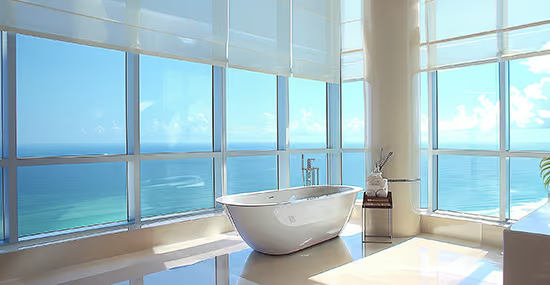
The horizon matters. Shades are selected and positioned to preserve views while softening intensity. You see the water. You feel the calm. Nothing feels sacrificed.

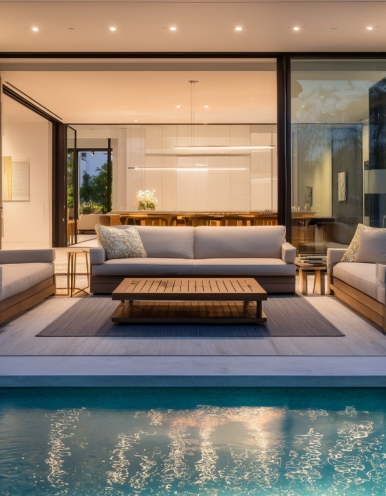
As daylight fades, interiors shift again. Shades lower the outside world gently, allowing interiors to glow without exposure. Evening feels intentional, not closed off.
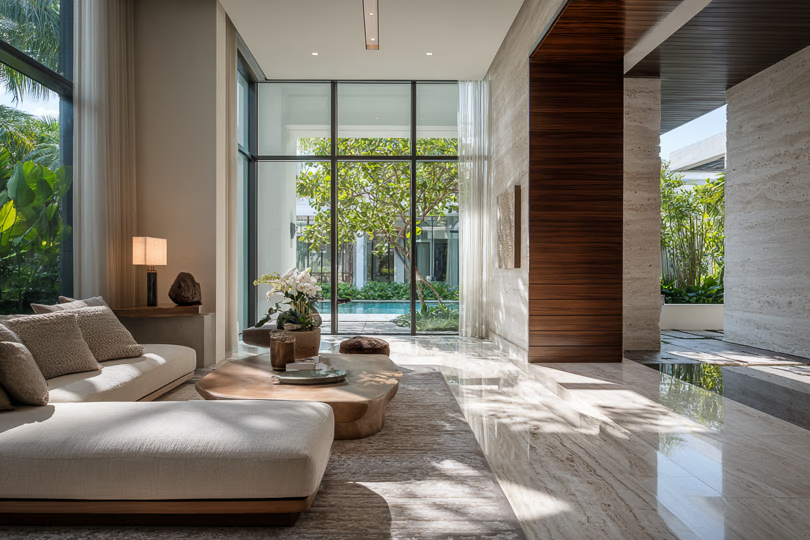
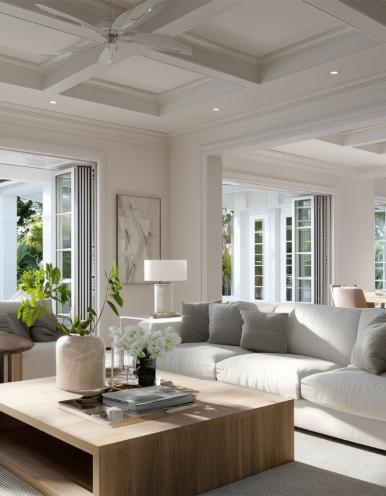
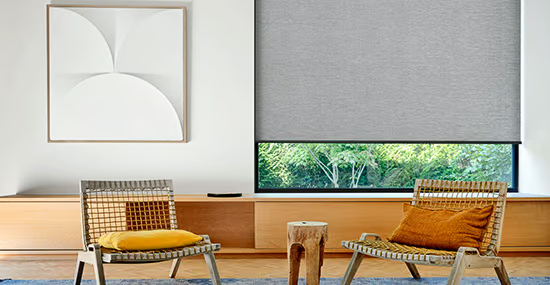
Shades should never compete with architecture. Fabrics, recesses, and movement are chosen so design remains uninterrupted. The technology disappears entirely.
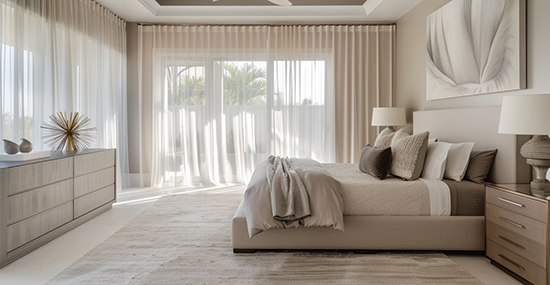
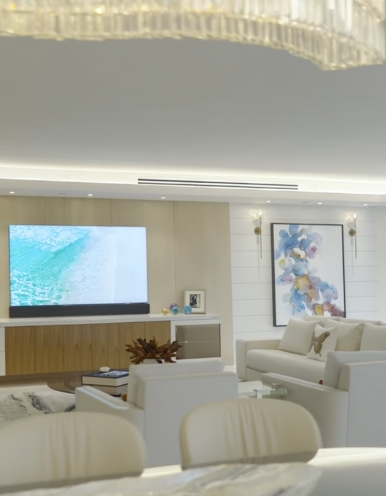
Light defines volume before walls ever do. Window shades shape how spaces breathe—how materials reveal themselves, how edges soften, how rooms feel larger or more intimate without changing a single line. When daylight is guided instead of blocked, architecture remains the hero. Nothing competes. Nothing interrupts. Just space, behaving beautifully throughout the day.
We design and install motorized roller shades, sunscreen fabrics, blackout shades, and layered combinations depending on room use. Bedrooms often require blackout capability, while living areas favor light-filtering fabrics. Shade selection is coordinated with the home’s lighting and control systems.
Yes. We regularly integrate both Crestron and Lutron motorized shade solutions, selected based on performance, noise level, fabric options, and control requirements. Both platforms allow precise, reliable shade movement coordinated with lighting and other systems.
High-end motorized shades are designed for near-silent operation. When properly specified and installed, movement is smooth and discreet, even in bedrooms and media spaces. Motor selection and mounting details are critical to achieving this result.
Yes. Shades can operate in coordination with lighting scenes so daylight and artificial light work together. This allows rooms to maintain consistent ambiance throughout the day without manual adjustment.
Both options are available. Wired shades are typically preferred in new construction for reliability and longevity. Battery-powered shades may be suitable for selective retrofits. Power strategy is determined early to avoid visual impact later.
Ideally during architectural and lighting design. Early planning allows shades to be recessed, aligned, and powered invisibly. Retrofits are possible, but early coordination produces the cleanest result.
Morning arrives gently. Afternoon glare never interrupts. Evening privacy settles without a thought.
Your home already knows when and how motorized window shades need to be.
Interior Designer
The shades never interfere with the space. They preserve every line we worked so hard to create. Clients feel the comfort immediately—but never see the mechanism behind it.
Homeowner
Our home feels calmer throughout the day. The light is always right, and the movement is completely silent. It’s one of those features you stop noticing—because it’s always correct.
Architect
What impressed me most was restraint. Nothing added visually. Everything respected the architecture. That discipline is rare—and essential.
Builder
Clients don’t call with questions. They just live in the space. That’s the best outcome we can ask for.