
Evan M.
Homeowner
Our home never hesitates. Video calls, music, security — everything just works at once. It’s the first system we’ve owned that completely disappears from thought.

Before speed or coverage, there is understanding. How spaces are used. Where pauses happen. When demand peaks. Networks designed this way don’t react — they anticipate. The home remains responsive even when life becomes layered: streaming, working, hosting, resting. Everything flows because the foundation noticed first.
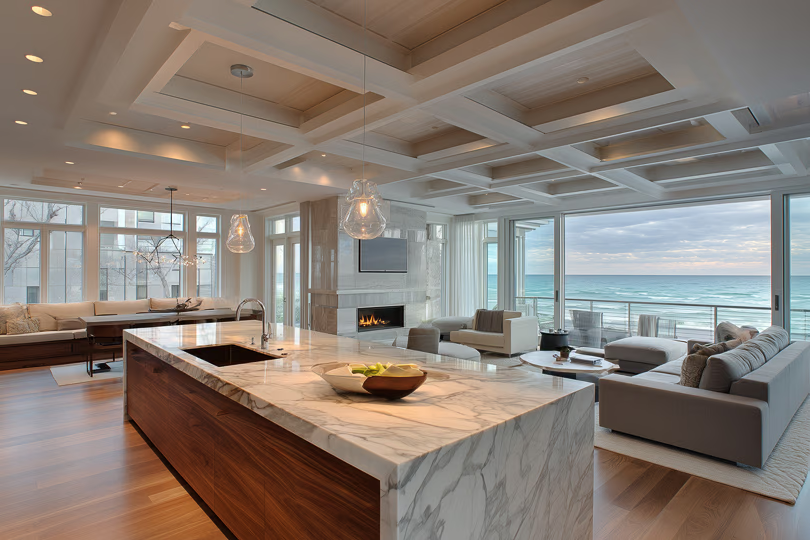
Modern homes carry more demand than ever. Screens, speakers, cameras, lighting, climate — all speaking at once. Networks built for this reality don’t strain. They distribute calmly, balancing traffic so no moment overwhelms another. The experience stays smooth, even when the house is fully alive.

Infrastructure still needs a home — just not the spotlight. Equipment is organized, cooled, and protected in spaces designed for longevity, not visibility. When access is needed, it’s immediate. When it’s not, it disappears entirely.

Connection shouldn’t end at glass. Terraces, pools, and outdoor lounges remain part of the experience — not an afterthought. Movement feels uninterrupted. Even outside, the home responds as one environment.
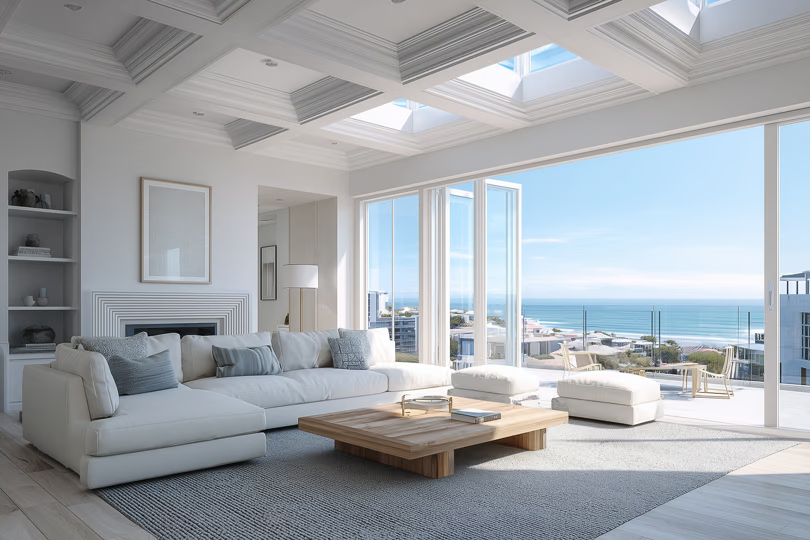
Homes grow. Technology evolves. A well-designed network doesn’t resist change — it welcomes it. New systems arrive without disruption. Performance holds. Walls remain untouched. The future fits because space was made for it early.
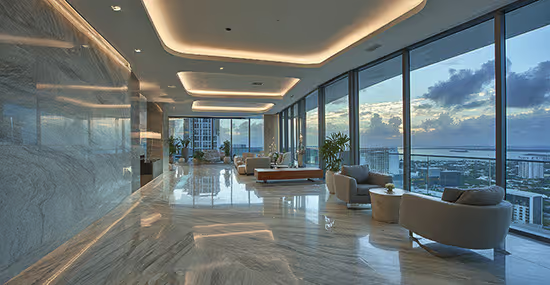
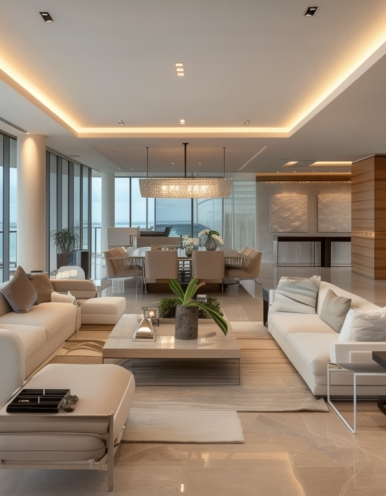
Great Wi-Fi doesn’t blanket a home — it learns it. Walls, volumes, materials, and movement patterns shape how signals behave. When designed properly, connection feels present everywhere without ever becoming visible. Living rooms, kitchens, bedrooms, even outdoor edges respond the same way: instantly and calmly. Nothing drops. Nothing hesitates. The architecture remains untouched, while the experience stays continuous.
A smart home networking installer designs and implements the wired and wireless foundation that supports all connected systems — from Wi-Fi to security, audio, and automation. The focus is reliability, segmentation, and long-term stability, not just internet speed.
Mesh systems often prioritize convenience over structure. In complex homes, they introduce interference, latency, and roaming issues. A properly designed network uses planned access points, wired backbones, and signal control to maintain consistency everywhere.
Yes. Smart homes require traffic separation, predictable latency, and power management that standard home networks don’t address. This ensures lighting, security, and control systems never compete with personal devices.
VLANs separate device traffic into secure layers. This protects critical systems while maintaining performance and security across the home.
Racks are designed for airflow, access, and longevity — often concealed or integrated into utility spaces. Appearance is secondary to stability and serviceability.
Yes. Networks are designed with capacity, expansion, and adaptability in mind, allowing new systems without structural disruption.
Power-over-Ethernet simplifies infrastructure by delivering power and data together, improving reliability and reducing visible hardware.
When the foundation is right, nothing has to fight for attention. Every moment arrives exactly as it should.
Homeowner
Our home never hesitates. Video calls, music, security — everything just works at once. It’s the first system we’ve owned that completely disappears from thought.

Interior Designer
They respected every line of the architecture. No visual noise, no compromises. The infrastructure stayed invisible, and that’s why I keep specifying them.
Builder
Handover used to be stressful. Now it’s calm. Buyers move in and everything simply responds. No calls. No confusion.
Architect
Their planning happens early and quietly. That’s rare. It shows in how effortless the finished space feels.